
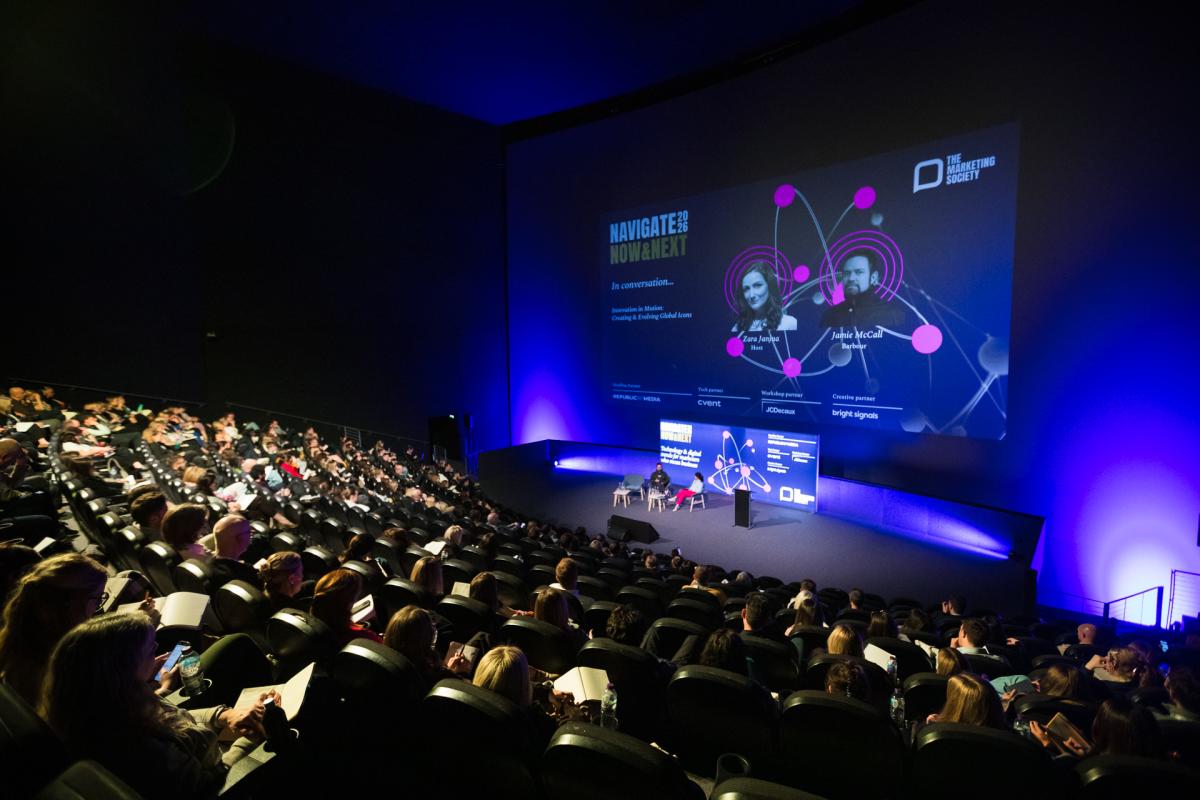
The pace of digital and technological change has never been greater, bringing with it extraordinary opportunities to drive growth, build brands and deliver exceptional customer experiences. But with constant innovation comes complexity, and the biggest challenge for marketing leaders today is knowing how to cut through it.
That is why Navigate: Now & Next exists. Great marketers need insight and foresight. They need to know what is happening now and what is coming next, and we curate and collate that across our global community in one unmissable series. Navigate: Now & Next gives marketers actionable inspiration, a clear understanding of what they need to know and do now, and how to anticipate and prepare for what is coming next. Through practical conversations, we bring together Change Leaders, industry experts and the people shaping marketing's digital and technological evolution, while redefining business, brand growth and customer experience.
Connecting like-minded professionals, exchanging ideas and leaving with practical takeaways to apply immediately has always been the point. Don't just keep up, lead the way.
FROM DIGITAL DAY TO NAVIGATE: NOW & NEXT
This series started life in Scotland as Digital Day. Digital Day suggested a focus purely on digital channels and tactics, but this event has always been about much more than that, and this year the name has been refreshed to reflect what it has become. Navigate: Now & Next better captures the focus on technology and digital trends in their broadest sense, from AI and data to emerging platforms and technological transformation. It is about helping marketers navigate the now and the next of technology to drive business impact, for marketers who mean business.
What started as a single market conversation has now gone properly global. In 2026, Navigate: Now & Next ran across England, Scotland, Singapore, Hong Kong and the UAE, each hub bringing its own speakers, case studies and local flavour, but together building a single, connected conversation about where marketing technology, and AI in particular, is really heading. The name has changed, but the ambition behind it has only grown: one series, one set of questions, told through five very different markets.
THE SIX THEMES THAT UNITE EVERY HUB
Together, they tell a consistent story: the technology is ready, but organisations, and the people within them, are the real determinant of who wins.
1. The challenge is not tech, it is organisational readiness
Every hub arrived at the same conclusion: AI is moving quickly, but the biggest barriers to progress are internal. Leadership alignment, decision-making, organisational structure and culture matter more than access to new tools. Singapore's opening session put this most bluntly, with research from Ekimetrics showing that the biggest barriers facing APAC marketing leaders are internal: siloed teams, disconnected KPIs and fragmented decision-making that no amount of AI investment will fix on its own. The UAE reinforced this from a different angle: Hadi Lotfi (Plan.Net Group) argued that AI readiness is not rising at the same pace as AI budgets, with around forty per cent of agentic AI projects predicted to be cancelled by 2027 because of missing workflows and unclear ownership rather than the technology itself.2. Human skills are more valuable, not less
As AI automates execution, uniquely human capabilities, creativity, judgement, empathy, strategic thinking, community-building and leadership, are becoming the true sources of competitive advantage. In Scotland, Crawford Hollingworth made the case with disarming clarity: creativity, emotional connection, cultural intuition and moral reasoning are not just difficult for AI to replicate, they are structurally beyond it, and as AI flattens the playing field on efficiency these capabilities become the only true source of differentiation. Serene Haddad (Nestle) made the commercial version of this argument explicit in the UAE: as AI becomes commoditised and accessible to everyone, what increasingly separates brilliant marketers from the average is sharpness of judgement and clarity of thinking, not tool usage.3. AI has moved from experimentation to implementation
The conversation is no longer about whether AI will change marketing, but how organisations integrate it effectively. Success depends less on accumulating tools and more on embedding AI into workflows, systems and operating models. Scott Spirit's session in Singapore made this point with operational precision: the gap between organisations running disconnected AI pilots and those building genuinely integrated ecosystems is becoming one of the defining competitive fault lines of the next three years, and the pilot phase is now over. The UAE reinforced this with the idea of moving from prompting individuals to orchestrating teams of agents, and from isolated tools to fully connected, governed workflows, where the marketer's role shifts from operator to architect.4. Traditional marketing models are breaking down
Whether discussing AI agents, creator-led discovery, social search or fragmented customer journeys, speakers repeatedly challenged legacy ideas about funnels, channels and campaign planning. In England, sessions from Publicis Media, Diageo and DEPT converged on the same urgent point under the banner of the B2A era: AI agents acting on behalf of consumers are already intercepting the customer journey, and brands that cannot be read by an AI agent simply will not be selected. Melissa Laurie's session in Singapore added the discovery layer, showing that TikTok and Instagram now function as search engines as much as entertainment platforms. The UAE went furthest with Nestle's death of the funnel argument: discovery, validation, purchase and advocacy now happen within a single compressed moment, driven by creators rather than brand-owned media.5. Brand and business experience are converging
Strong brands are increasingly built through customer experience, product design, service quality and trust rather than communications alone. The distinction between brand-building and operational delivery is becoming less meaningful. Walter de Oude's session in Singapore reframed this clearly: brand is no longer primarily built through advertising, but through the ease of opening an account, the simplicity of a product, and the moments when a company earns or loses a customer's trust without a single campaign in sight. In the UAE, Nissan's create, deliver, optimise framework and The Trade Desk's research on premium media both showed how brand perception is now shaped as much by environment, product efficacy and context as by creative messaging.6. Community and trust are emerging as durable competitive advantages
As algorithms, platforms and AI-generated content become more volatile, authentic communities and trusted relationships were repeatedly highlighted as assets that are difficult to replicate and increasingly valuable. Pip Jamieson made this case in both England and Scotland with characteristic conviction: as generative AI floods every channel and algorithmic reach becomes increasingly unreliable, the scarcest asset in marketing is genuine human belonging, with Rapha's community members cited as spending three times more than non-members. The UAE reinforced this from a trust perspective: Nestle cited research showing that the vast majority of consumers trust creator content over brand advertising, with brand trust now largely outsourced to community voice before a purchase ever takes place.WHAT THIS MEANS FOR MARKETERS
Taken together, these six themes point to a single conclusion: the organisations that succeed will be those that combine technological capability with human judgement, organisational clarity, authentic community and long-term strategic thinking. AI is not optional, and it is no longer experimental, but it is also not a substitute for the fundamentals of great marketing: clear positioning, coherent brand signals, deep customer understanding and the courage to make judgement calls AI cannot make for you.
Every hub brought this story to life in its own way, through different sectors, case studies and local market dynamics. Explore each hub's own insights piece for the full detail behind these stories.
Navigate Now & Next 2026
Content from across our hubs
Scotland
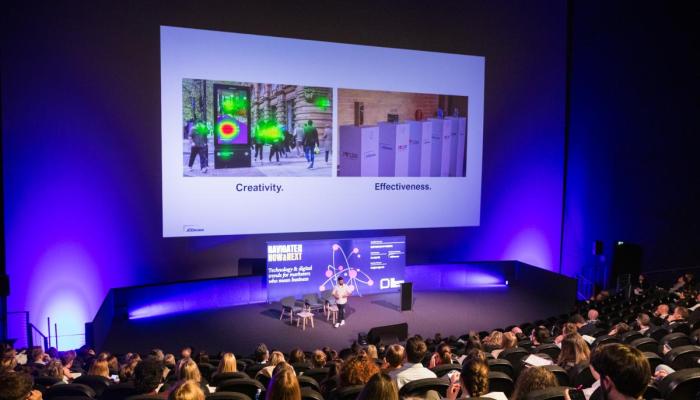
The human edge in an AI world. The discussions centred on what remains uniquely human as AI capabilities grow, from creativity and cultural intuition to the neurobiology of purpose and the commercial power of genuine community. The emphasis was on AI adoption as a leadership decision rather than a technology one, with a consistent reminder that opinion, authenticity and the courage to invest in what AI cannot manufacture are what will set brands and leaders apart.
Hong Kong
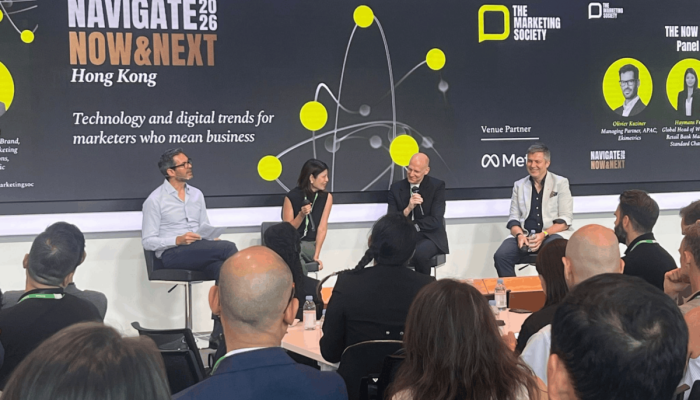
Leading through complexity and fragmentation. The discussions centred on leadership in an increasingly fragmented environment, with internal complexity rather than technology identified as the real barrier to progress. The emphasis was on balancing short-term commercial pressure with long-term brand thinking, navigating fragmented customer journeys driven by creators and messaging platforms, and recognising that human judgement and strong leadership remain the essential advantage as automation accelerates.
Singapore
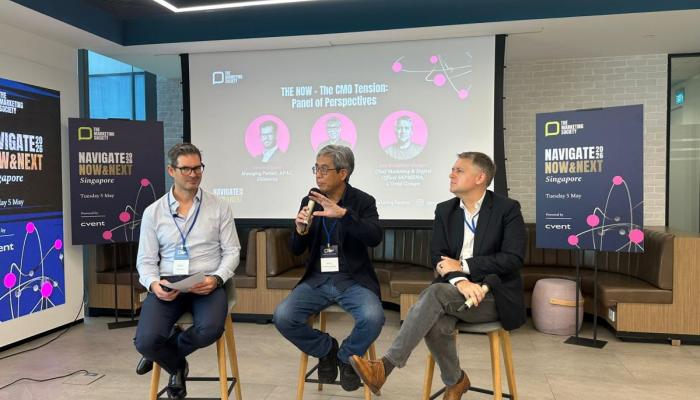
Fixing the organisation before chasing innovation. The discussions centred on organisational complexity as the real barrier to progress, with siloed teams, fragmented KPIs and disconnected systems consistently identified as the issue no amount of AI investment can fix on its own. The emphasis was on brand being built through experience rather than communication, discovery shifting decisively to social and creator platforms, and connected systems beating collections of disparate tools, with marketing success increasingly dependent on organisational clarity and integration rather than the technology itself.
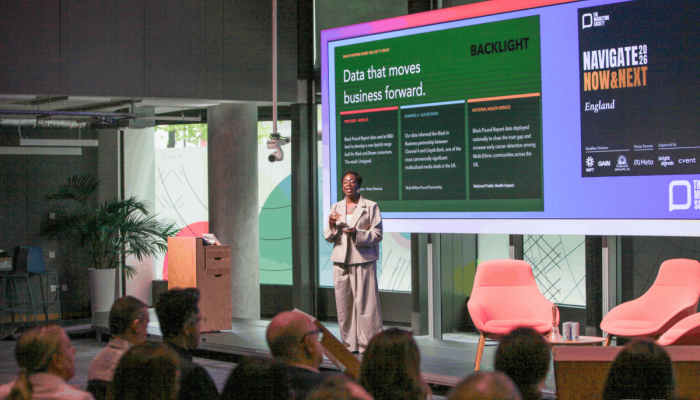
England
Marketing for an AI mediated future. The discussions centred on how AI is changing the customer journey itself, from AI discoverability and the rise of the B2A era to the commercial cost of overlooking multicultural audiences and the breakdown of the brand versus performance divide.
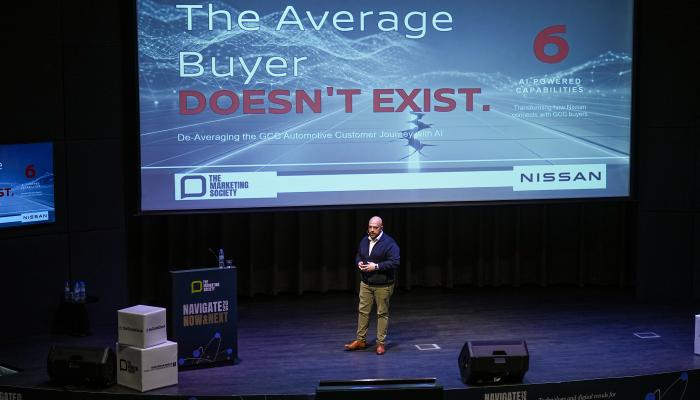
Dubai
Members and industry leaders to explore how AI is reshaping marketing across the region. From social-first storytelling and agentic operating systems to premium media and the death of the traditional funnel, the day offered a clear message: the brands that build their own AI capability, rather than simply renting it, will be the ones that thrive.