
Cannes gives marketing a global stage. Davos gives it a global agenda. And that difference raises a better question: Could Davos be where upstream influence truly begins?
After years attending Davos, for EY's John Rudaizky this year felt different. Here he reveals what the conversations around AI trust, youth opportunity and marketing's evolving role really mean for the work that happens after everyone flies home.
I’ve attended Davos for many years, observing how the dialogue around sustainability, purpose and geopolitics deepens each time. This year carried a different intensity, amplified by the presence of POTUS, which elevated both the pace and the stakes of the discussions.
Outside the Alps, one question always lingers: What does Davos actually achieve? The skepticism is understandable. Yet just as Cannes inspires possibility, Davos offers clarity on the forces that shape upstream influence - from geopolitics and economics to AI, youth inclusion and sustainability.
For me, the most revealing moments this year weren’t just on stage, they happened anywhere from the hustle of the Promenade, the convening moments at Goals House and beyond, where NGOs, CEOs, policymakers and CMOs cross paths. In those exchanges, real viewpoints are revealed, alliances form and unusually candid conversations unfold.
It’s also where CMOs find a more strategic seat, helping shape upstream decisions on AI, youth opportunity, trust and sustainability. Brands have always shaped public sentiment, but the forces around them - geopolitical tensions, sustainability demands AI’s acceleration - now change so quickly that marketers must bring deeper context to the table. The more we understand these pressures, the more relevant our perspective becomes.
That shift was visible. More chief marketing officers were in town, convened in part by Adweek’s Jenny Rooney. CMOs were invited into discussions once reserved for CEOs, economists and technologists: geopolitics, AI governance, global growth and youth inclusion. These issues define the next decade and they sit squarely where modern marketing already lives.
CMOs intuitively understand culture, citizens and customers. We sense early where trust is building and where it is quietly eroding. In a moment defined by technological acceleration and social strain, that perspective matters, and this year, Davos seemed to recognize it.
What stayed with me were three themes that continued echoing long after leaving the mountains.
1. Trust in the age of AI
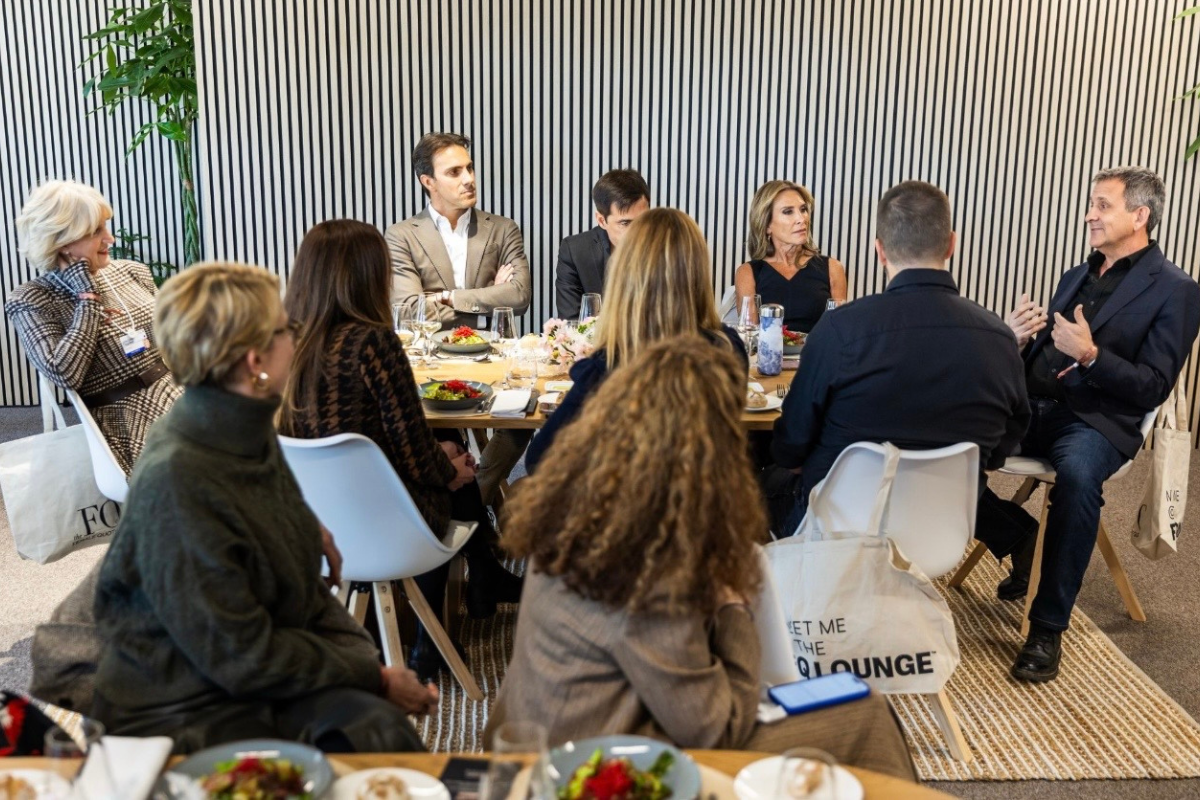
Authenticity can no longer be declared - it must be demonstrated. At a roundtable with the Female Quotient and Adweek, the Davos conversations around job loss and AI’s potential took a different shape once we brought the customer into the room.
AI can now produce almost anything: instantly, convincingly and flawlessly. That makes authenticity a behaviour, not a tagline. People no longer trust what companies say they are; they trust what they repeatedly do, especially when the moment is difficult.
Emerging Themes
Personalisation is now table stakes
But trust is built in the moments that aren’t necessarily augmented when companies respond with clarity, humanity and accountability.
The biggest AI risk isn’t rogue outputs
It’s sameness. When every brand uses the same models, with the same optimization logic, the world starts to feel homogenized. Distinctiveness evaporates.
Empathy is contextual
Sometimes people want warmth and reassurance. In moments of anxiety or financial (or other) stress, they prefer clear, rational guidance. The question is not human or machine but what kind of empathy the moment requires.
Trust tends to break at the seams
In the handoffs between data systems, in unclear, in data flows that are not understood. Creativity can be the trust lever, using AI to design experiences that feel considered and human rather than efficient or logical. Even when AI generates the response, the brand owns the outcome.
Disclosure also must evolve. People don’t want disclaimers; they want clarity of intent. They deserve to know when AI shaped an outcome, but not in a way that interrupts their experience. This raises an uncomfortable but necessary question: Do we need a new kind of trust mark? Not simply “AI generated” but “AI used responsibly.” A signal that reflects standards, judgment and accountability.
In a world of infinite automation, creativity becomes the last true differentiator. We need to push ourselves to find creative ways can we build trust through AI. Brands must also use AI to design experiences that feel more human, not more machine-like. Because even when AI generates the response, the brand still owns the outcome.
2. Youth, skills and the new brand contract
Brands have spent years trying to capture young people’s attention. The opportunity now is to invest in their talent. One third of the EY 400,000-strong workforce is from Gen Z, so this is not abstract. In an age of AI and uncertainty, trust is no longer built by what businesses say to young people but what they enable them to become. The EY Belong Barometer reveals a stark message: 92% of Gen Z report experiences of exclusion.
This is not just a social risk, it’s an economic one. If work is to remain a source of belonging, organisations need to respond with value, skills and purpose, not empty slogans. Programs where youth-led teams deliver strategic work with senior oversight show that when young people are given responsibility, they grow and remain loyal in return.
The scale of the challenge is enormous: 1.2 billion young people competing for 400 million jobs. Human skills - creative thinking, critical judgment, intellectual humility and lateral problem solving - become the currency of resilience. And in an AI driven world, “meta cognitive skills” are emerging as essential.
3. The evolving role of the CMO
From storyteller to steward of trust. For the first time in years, the conversations in Davos framed marketing as a lever for economic and societal progress. The modern CMO is becoming a steward of trust in an AI mediated world and a convener of ecosystems - technology partners, educators, creators, governments. Our role is no longer about capturing attention. It’s about enabling progress.

"CMOs understand the human impact of strategy, what builds confidence, what erodes it, what creates belonging, what signals exclusion. We can bring coherence where organisations can fragment. And we can help anchor technology in human outcomes, not technical potential."
John Rudaizky EY
From dialogue to action
Davos is often criticized as a bubble. But bubbles can reveal pressures before the rest of the world feels them. What struck me this year wasn’t consensus, it was contradiction. Leaders with opposing views on AI, growth, inequality and governance sat side by side. That friction is valuable. It’s also familiar. CMOs navigate these contradictions daily - innovation vs. responsibility, speed vs. confidence, data vs. judgment.
The real test begins after the flights home. Credibility will come less from what is said on mountain stages and more from what changes in everyday practice: how companies use AI, how they invest in young people, how they treat customers when the system fails.
Our task is simple to articulate and difficult to deliver.
- Use creativity and technology to expand opportunity, not just accelerate output.
- Build belonging through skills and purpose.
- Earn trust through behaviour.
If CMOs can do that, we will not need to argue for a seat at the centre of Davos. We’ll already be there.
The views reflected in this article are the views of the author and do not necessarily reflect the views of the global EY organization or its member firms.