In a world defined by constant change, disruption and endless choice, marketing is finally having its moment. No longer just selling products, it’s about building trust, sparking connection and shaping culture. To mark 40 years of The Marketing Society Global Awards, we asked some of the industry’s brightest minds why marketing matters and explored the campaigns that prove marketing has always been a force for business, culture and the world around us.
Part 2 | 2000s to 2010s: marketing driving industry transformation and digital revolution
From 9/11 to Obama’s election, Beckham to Bolt, social media to streaming, reality TV to political upheaval, this era was defined by big world event and the digital revolution.
Marketing was dramatically transformed during these decades as the internet and digital technologies shifted the industry from print to online platforms. The move began with email marketing and early social media platforms like LinkedIn and MySpace, followed by the rise of Facebook which enabled users to share personal data and created demand for user-friendly, information-centric content.
Advances in data recording and storage made ‘big data’ a valuable resource, allowing marketers to track trends and gain unprecedented insights into consumer behaviour. This period also established digital marketing as a core strategy for engagement and growth, with social media, mobile-first design and personalised experiences becoming important tools. This era saw a fundamental shift in how brands interacted with consumers creating two-way conversations and data-driven relationships.
Marketing was central to maximising the benefits of new tech and brands that embraced these digital tools could reach wider audiences more cost-effectively, personalise experiences at scale and crucially measure their effectiveness.
These three campaigns chosen by guests at our 2025 The Marketing Society Global Awards Night encapsulate the rising importance of marketing in this era.
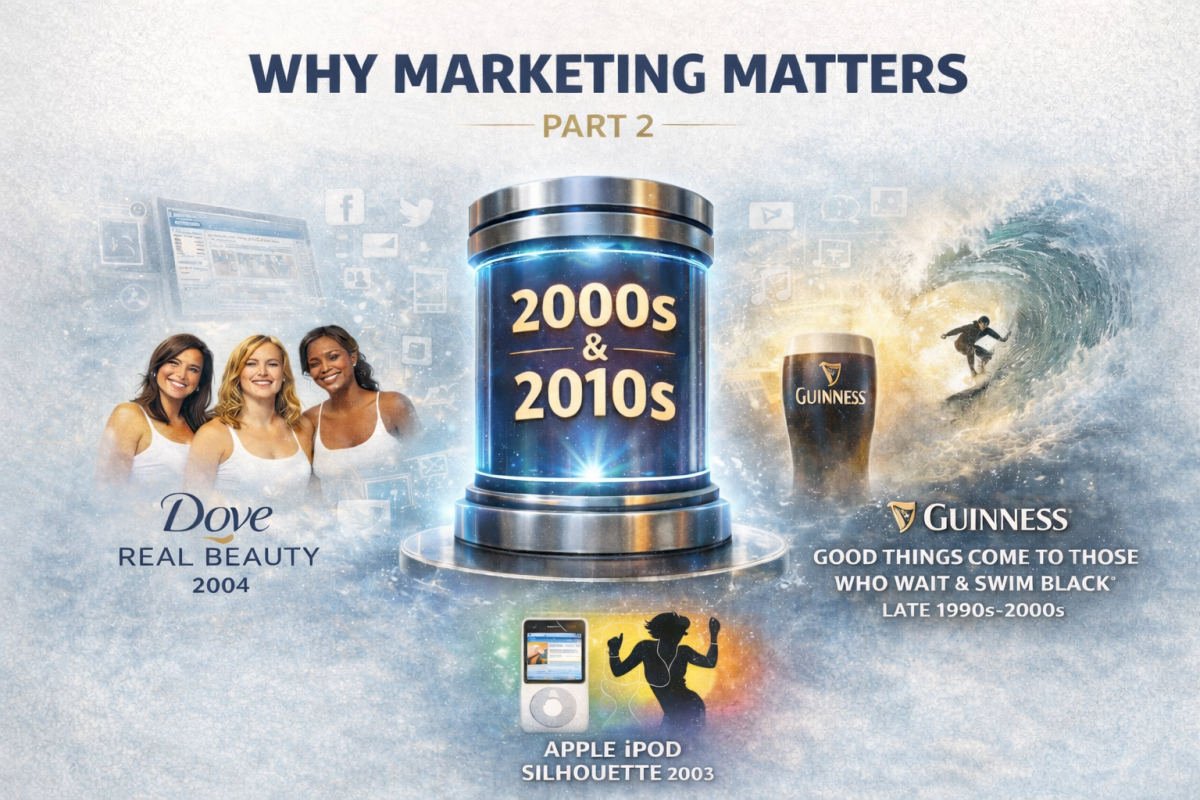
Dove Real Beauty, 2004
Dove's powerful Real Beauty campaign pioneered purpose-driven branding that delivered both cultural impact and commercial success. It emerged from research revealing most women, bombarded by images of female perfection, didn't consider themselves beautiful. Rather than simply promoting product benefits, Dove turned the beauty industry on its head by featuring diverse, real women in its ads, instead of models. This ground-breaking approach confronted the unrealistic beauty standards and the harmful impact of idealised media representations.
The activation was one of the first major, purpose-led marketing programmes which proved that brands could build meaning and loyalty by standing for something beyond the product they were selling. By authentic connections with consumers on deeper, emotional values, self-esteem and inclusivity, Dove created genuine brand affection.
This values-based approach proved commercially powerful too. Sales exceeded targets, establishing Dove as a top ten global brand and led to the Dove Self-Esteem Project, which educated young people on body positivity, extending impact to social good.
This campaign became a cultural benchmark that influenced how brands could communicate, promoting more inclusive and authentic representation. It proved that in the digital age, where consumers were increasingly scrutinising brand values, marketing that championed meaningful causes could achieve both profit and purpose.
Apple iPod Silhouette, 2003
This iconic ad series demonstrated how brilliant advertising can transform not just a product but an entire industry and our collective cultural behaviour. When Apple released the iPod in 2001, it revolutionised portable music but the real breakthrough came from the advertising that followed. The Silhouette campaign featured black silhouettes of people dancing against vibrant backgrounds, their white iPods and earbuds creating instant recognition. This striking imagery emphasised the joy and freedom of music on the go, turning a technology product into a lifestyle statement.
The genius lay in minimalism and universal appeal. The focus was not on tech specifications (storage capacity, battery life), ground breaking though they were, instead Apple sold emotion: the joy of music, movement and personal expression. The silhouettes were anonymous, allowing everyone to see themselves in the ads, making the iPod aspirational for all ages.
The campaign received critical acclaim and became instantly recognisable, driving huge sales growth and establishing the iPod as a cultural icon. It also exemplified the emerging power of what digital-age marketing could achieve - being intentional, targeted and measurable. In an era where consumers were bombarded with information, breakthrough creative that conveyed emotion and lifestyle over features could cut through the noise; marketing was defining how entire generations consumed media and expressed their identity.
Guinness debuts Good Things Come to Those Who Wait and Swim Black , late 1990s-2000s
Guinness’s Good Things Come to Those Who Wait campaign became one of the most influential pieces of advertising of the time. The Surfer commercial and its follow-up Swim Black redefined how audiences saw Guinness. Using cinematic storytelling and ground-breaking visual effects, these ads turned the act of waiting for a pint to settle (seen as an inconvenience) into a symbol of patience, craftsmanship and reward. The message was simple but powerful, quality is worth waiting for.
This creative approach didn’t just sell beer, it transformed the Guinness brand. The campaign helped modernise its image, connecting it with a younger audience while retaining its heritage of quality and tradition. Sales surged, proving that emotionally intelligent marketing can directly drive business growth.
Beyond commercial success, Good Things Come to Those Who Wait also revealed how marketing can influence culture. While being an age old saying, the phrase in this context became a modern proverb about perseverance and patience and serves as a reminder that the best marketing doesn’t just promote a product, it shapes perceptions, builds emotional connections and gave this brand new meaning in people’s lives.
From Guinness turning patience into a virtue, to Dove redefining beauty standards and Apple transforming technology into self-expression, these iconic campaigns demonstrated that authenticity, emotion and purpose could create positive change and drive profit. The lessons for marketing’s future were being laid: to succeed, brands now needed to stand for something, tell compelling stories and connect with people on human level.
Read Part 3 here.