In this final part of our Why Marketing Matters series, guests at our 40th The Marketing Society Global Awards ceremony looked back at the past 15 years and told us the campaigns that proved why marketing is a positive force for good in business, culture and the world around us.
Part 3 | The 2010s and 2020s: marketing directly shaping social policy and behaviour change
From Brexit and Trump to #MeToo and Black Lives Matter; the pandemic to global conflicts; social media and streaming to viral activism and political upheaval, this era has been one of unprecedented change.
The campaigns from this era demonstrate how marketing can do far more than sell products, it can shape culture, influence behaviour and drive social change for good. In the 2010s, brands embraced purpose-driven marketing, aligning with social and environmental causes and used emotional storytelling to connect deeply with audiences. By the 2020s digital tech, AI personalisation, influencer partnerships, VR and AR were on the rise, while keeping sustainability and inclusivity at the fore. Social media and behavioural insights allowed messages to reach the right people at the right time, encouraging greener habits, public health action and responsible consumption without restricting consumers’ choices.
Marketing mattered (and matters) because it has the power to turn commercial strategies, targeting, persuasion, and engagement into forces for measurable societal good, creating meaningful impact for individual, communities and the world.
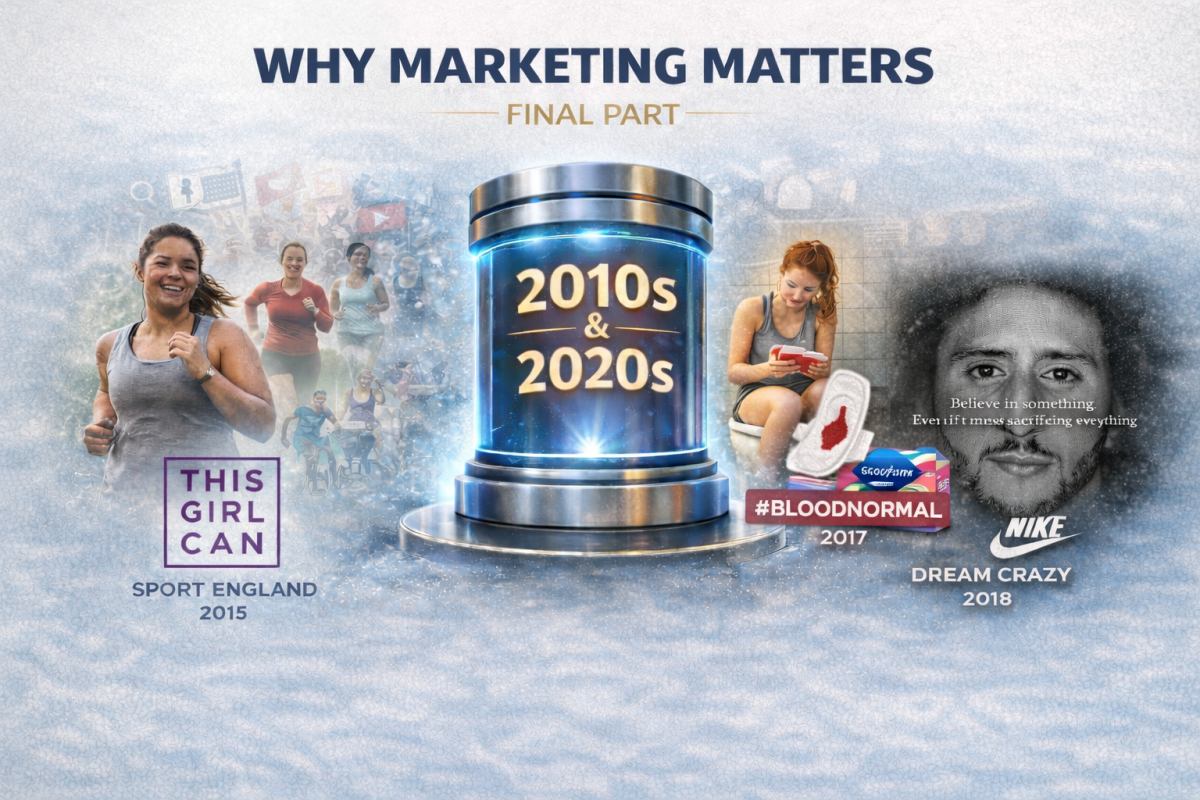
Here are three iconic campaigns chosen by guests at our Global Awards Ceremony that epitomised why marketing matters.
Sport England's This Girl Can, 2015
This campaign perfectly demonstrates how strategic marketing can genuinely drive social change and break down deeply entrenched barriers. Launched to address a striking gender gap (2 million fewer British women participating in sports than men), it tackled the underlying problem of the fear of judgment not the lack of desire that contributed to these numbers. Through brilliant marketing insight, it transformed what women were silently thinking into a powerful call to arms, proving that yet again, effective advertising doesn’t just sell products, it can spark a movement that reshapes culture.
Its brilliance stemmed from its authentic representation and emotional resonance. By showcasing real women of all shapes and sizes wiggling, sweating and enjoying moving it shattered conventional fitness imagery and made physical activity feel accessible rather than aspirational. The clever use of #ThisGirlCan created a self-sustaining community where women shared stories and supported each other, amplifying the message organically. Rather than focusing on weight loss or perfection, it emphasised relatable benefits like better sleep, improved mental health and confidence.
This Girl Can still stands as proof that marketing matters profoundly when addressing social issues. It didn't just advertise exercise, it changed how millions of women see themselves and their right to participate in sport. By continuously adapting to address specific barriers (women on lower incomes or with young children) it revealed how sustained, thoughtful marketing can breakdown both emotional and systemic obstacles and create a lasting cultural impact by understanding audiences, representing them authentically and empowering them to act.
Bodyform's #BloodNormal, 2017
For years menstrual product advertising fuelled period shame by using blue liquid to represent blood, reinforcing the notion that periods were something to hide. By being the first brand to show realistic red menstrual blood in mainstream advertising, Bodyform didn't just break an industry convention it confronted the societal attitudes that had made half the population feel embarrassed about a natural bodily function.
The marketing strategy was rooted in authenticity and normalisation. Rather than positioning periods as something to be discreetly managed, Bodyform depicted relatable, scenarios like a man buying sanitary products for his partner, a woman asking for a pad at a dinner party and blood on clothing. These honest depictions sent a powerful message that periods are normal not shameful. The #BloodNormal hashtag created a rallying cry for open conversation, while the campaign expanded globally with initiatives like designer period underwear and short films, demonstrating sustained commitment beyond a single ad.
This powerful campaign proved that marketing has the power to dismantle toxic shame and shift cultural norms. The overwhelmingly positive response shows that audiences are ready for brands to reflect reality rather than outdated taboos. #BloodNormal succeeded because it understood its audience's lived experience, giving voice to what they've been made to feel ashamed of. Bodyform didn't just advertise sanitary products, it helped end generations of unnecessary shame.
Nike Dream Crazy, 2018
Narrated by Colin Kaepernick, this was another campaign which demonstrated how marketing can transcend product promotion to become a catalyst for cultural change and social conversation. By featuring Kaepernick, a polarising figure who protested against racial injustice, Nike made a bold statement about brand activism, proving that organisations can use their platforms for meaningful dialogue about societal issues. While risking alienating certain audiences, it solidified Nike's identity as a brand unafraid to stand by its values. The campaign sparked global debates about corporate responsibility and demonstrated that marketing has the power to influence culture and inspire collective action for good.
Using inclusive storytelling and emotional resonance, the campaign also featured female athletes Serena Williams, Simone Biles and Megan Rapinoe and their stories of perseverance. Nike challenged stereotypes and celebrated female excellence across all competitive arenas. Dream Crazy reached far beyond professional sports, it inspired women to break barriers, transforming an athletic brand message into a universal call for empowerment. Through powerful imagery and compelling narratives about overcoming adversity, Nike created deeply personal connections with viewers, reinforcing that resilience and self-belief matter everywhere in life.
Once again Nike proved that transformative marketing can inspire action, drive social conversations, and empower individuals to pursue their dreams regardless of obstacles.
The most powerful marketing doesn't just reflect culture, it actively reshapes it by understanding everyday lives and representing them authentically. With consumers increasingly expecting brands to stand for something beyond profit, the campaigns we’ve highlighted in this series prove that courageous, purpose-driven marketing isn't just ethically important, it's essential for creating lasting cultural impact and transforming how people see themselves and their place in the world.