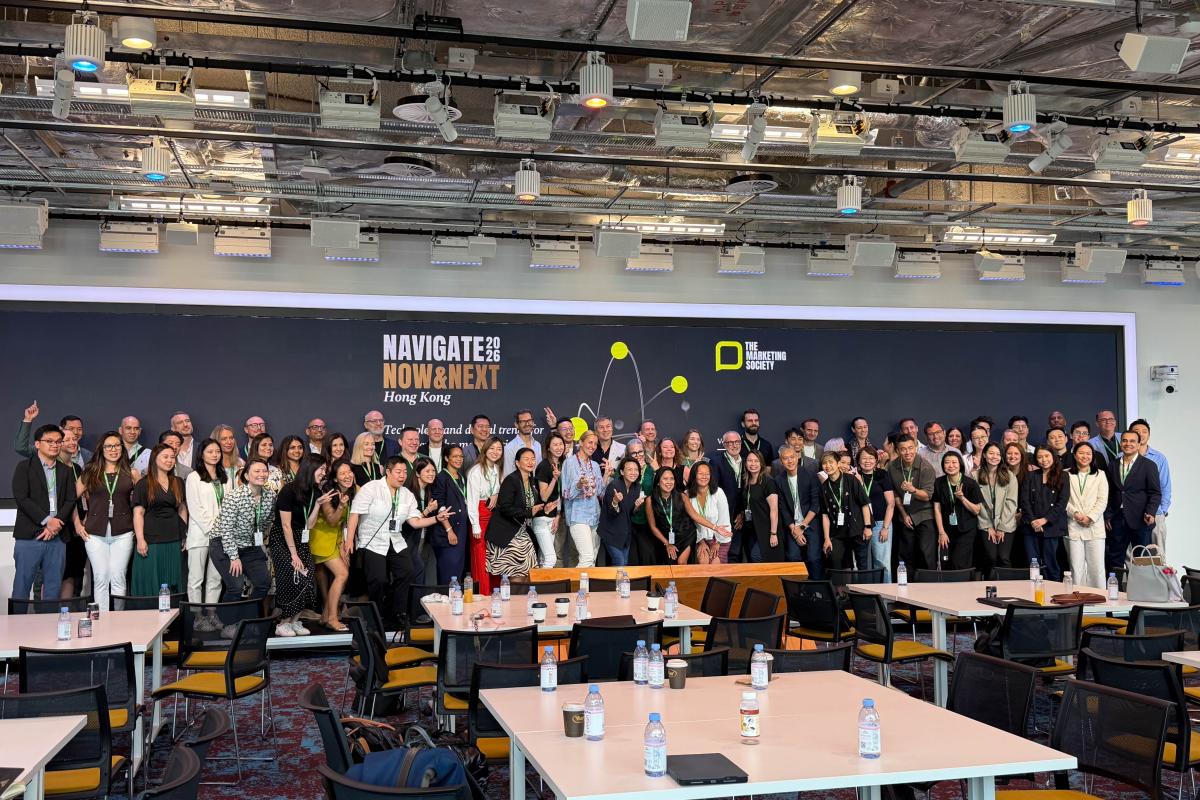
It’s obvious after listening to CMOs at this year’s Navigate Now & Next in Hong Kong, that many are trapped in a system that rewards this month’s numbers while taxing the next three years of growth.
Digital has made the lower funnel look precise, but the work that creates future demand delivers in quarters and years, with noisier data and slower feedback. Faced with that asymmetry, most organizations follow what looks certain, not what is strategically right.
The result is that data becomes the answer to every question. As Edward Bell has argued, much of what passes for marketing is really sales activation aimed at the small minority already in market. The organization sees strong short term metrics and confuses demand harvesting with demand creation. Growth seems healthy until pricing power erodes and the business becomes dependent on discounts, promotions and tactical spikes.
5 Key Points
Performance pressure is reshaping marketing decisions
Many organisations are prioritising short-term measurable outcomes over long-term brand growth.AI is accelerating efficiency but not necessarily effectiveness
Automation and optimisation tools are improving execution speed, but often narrowing creative thinking and strategic ambition.Brand building is becoming harder to defend internally
Marketing teams increasingly need stronger commercial evidence to justify long-term investment in brand activity.Measurement systems are driving behaviour
Businesses are focusing on metrics that are easy to track, which can distort decision-making and reduce experimentation.The future requires balancing efficiency with trust
Sustainable growth will depend on combining data, AI, and performance with human judgement, creativity, and emotional connection.Several factors contribute to this dissonance
First, organizational misalignment. Budget control, P&L ownership and marketing accountability often sit in different places. The people who understand the upside of long-term brand building are not the same people who must justify the spend. That misalignment drives a bias to immediate efficiency over overall effectiveness.
Second, decision compression. Reporting cycles that used to be quarterly are now weekly or even daily. Teams are pushed to react to each new datapoint, reallocating budget and tweaking creative before learning cycles are complete. Strategy dissolves into a sequence of micro-optimizations and the organization forgets what it is trying to build.
Third, the allure of AI and automation. As martech stacks become centerstage, any activity that does not easily reduce to an algorithm is quietly labelled inefficient. Yet it is often the human work of creative excellence and insightful targeting that allows the algorithms to deliver outsized returns. Efficiency becomes the watchword, when effectiveness should be king.
All of this creates a specific kind of false confidence
Dashboards get greener, but the business becomes structurally weaker. Revenue is delivered at the cost of lower margins, more volatile demand and customers trained to wait for deals.
We learned that some CMOs escape this trap by holding themselves accountable for both brand and performance, and influence how the organization makes trade-offs.
They build clear ladders from marketing activity to business outcomes in language finance trusts. That means cross functional KPIs that connect brand and activation to revenue growth, contribution margin, customer lifetime value and market share. It means pairing short term response metrics with longer term indicators like base sales, penetration and pricing realization, so the lag effect is visible and credible.
They create a bidirectional feedback loop with the c-suite
Monthly, they show what marketing did, what moved now, what is expected to move later and how it will be tracked. They make their assumptions explicit and specify the conditions under which spend will be reallocated. Over time, this replaces faith-based arguments with evidence-based confidence, even if the evidence is imperfect.
Finally, they own the counter narrative. The default story in most businesses is simple. Sales first, brand when we can afford it. The modern CMO’s role is to articulate and defend the alternative story. Sustainable growth at acceptable margins comes from orchestrating brand and activation together, not trading one off against the other. That requires courage and repetition. It means being explicit about what you can deliver this quarter, what you are building over the next three years and what time and investment you need to do both.
In other words, the job is not to escape the tension between short term and long term, but build a connection by redesigning the narrative.