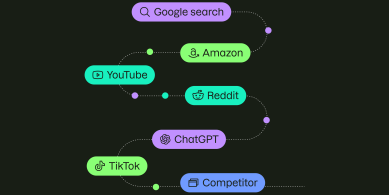
What the PepsiCo media move reveals about who's really driving agency transformation and the five questions every CMO should be asking.
Think pieces
Why the today's most effective leaders aren't those who are out front, they are the ones leading from the middle. Andy Goldberg, Chief Marketing Officer, and Chair of The Marketing Society New York draws on his experience leading teams.
Lessons in the key to achieving great global marketing, wherever you go.
Real growth in wellness marketing (and life) comes from improving the routines we already have, not adding new ones.
Why doing good in marketing isn't a statement of values, it's in the everyday choices about partners, content, people and trust by Rasha Hamzeh
Influencer marketing's old playbook is losing its grip on audiences. Fanbox’s Richard Summers reveals a framework to help brands build real community engagement through micro-creators.
Rachel Letham reviews a recent LinkedIn Live event with Thomas Barta: The Marketing Leadership Masterclass. With corporate growth stagnating while real change is accelerating, we need more Growth Rebel - people who ignites ideas and makes them happen, as Thomas explains.
Inclusive leadership is an ambitious choice to challenge outdated workplace norms and build a culture where people feel trusted, supported and safe enough to thrive and do their best work.
What does it take to build a marketing and communications function from nothing, earn the trust of sceptical senior leaders and turn a regional idea into a global benchmark?
A recent CEO Conversation event held under the Chatham House rule revealed important leadership lessons which can be applied to any organisation in any sector. Integrated Media Lead, Procter and Gamble’s Billie Wilson shares her thoughts.
Hadi Lotfi explores how AI is moving marketing beyond experimentation and individual tools toward connected workflows, stronger operating models and smarter decision-making that delivers real business impact.
Independent creative agency RPM and research specialist, Canvas 8, interviewed senior marketers from FMCG, hospitality, tech and entertainment sectors, to understand how effectively brand systems today are keeping pace with business operating models.
DEPT®'s Global Market Sentiment Pulse, produced in partnership with The Marketing Society, draws on a survey of 3,000 consumers and the perspectives of senior marketing leaders from Barclays, British Airways, Diageo, Tesco and more to reveal what people actually want from brands in an age of instability.
This session explored what it takes to earn attention, build trust and leave a lasting impression. The strongest communicators know exactly what they want people to feel and do, then make every detail work towards that outcome. The message was clear: credibility must be earned, ideas must be interesting and being different matters more than simply being better. Because safe may be comfortable, but it is rarely memorable.
Lex Bradshaw-Zanger on why the principles of physics offer a surprisingly useful framework for understanding how brands grow, customers choose and marketing works.
The Marketing Society’s Global Leadership Mentoring Programme played a key role in helping Worldwide Cancer Research's Laura Brady achieve her goal of becoming a CEO.
South Korean consumers, fed up of data breaches and fake reviews are demanding tangible "proof" before trusting hyped products, pushing brands to build verification and authenticity directly into the shopping experience.
Drawing on decades in television, Maz Farrelly shared practical lessons on capturing attention, building memorable personal and brand identities, and embracing boldness over mediocrity. She encouraged marketers to use AI as a tool rather than a substitute for creativity, arguing that the brands and people who stand out are those willing to be genuinely different.
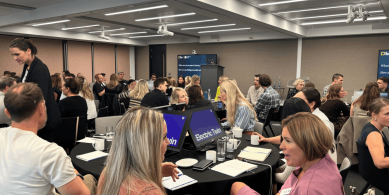
Marketers from luxury, FMCG, finance, B2B and agencies gathered for an open discussion on what it takes to engage Gen Z in today's fragmented media landscape. The conversation highlighted the growing importance of authenticity, niche communities and regional cultural influence, alongside practical lessons from brands successfully building trust with younger audiences.
Maz Farrelly challenged marketers to think like television producers by making every pitch, profile and interaction clear, distinctive and impossible to ignore. The session showed that standing out requires more than polished messaging or AI-generated content: it means knowing what you want, communicating a memorable point of difference and deliberately giving people a reason to keep listening.