
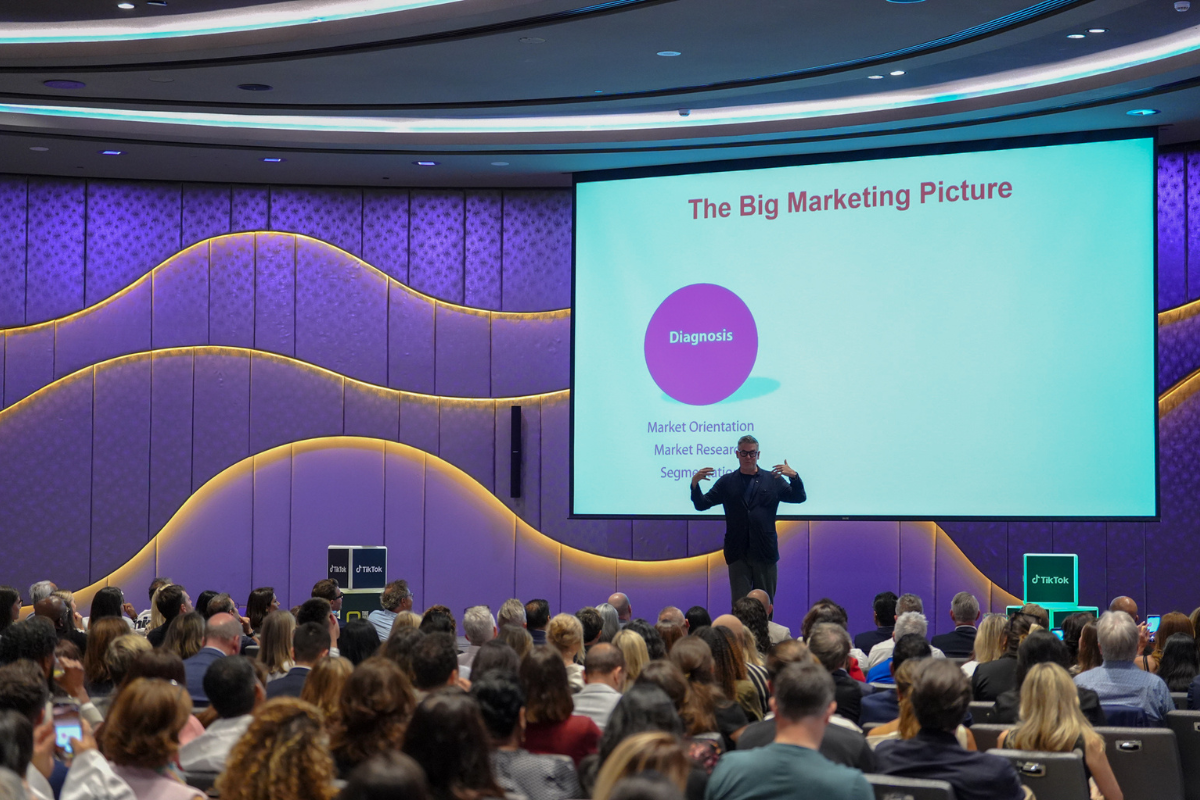
At The Marketing Society’s 10th Anniversary in Dubai, Sophie Devonshire, Mark Ritson and Amina Taher, Wio Bank delivered a timely reset on what marketing strategy actually is and isn’t. In a world shaped by AI acceleration and performance pressure, the conversation reinforced a simple truth: effective marketing starts with diagnosis and strategy, not tactics, and long-term brand thinking remains the foundation of profitable growth.
What Marketing Leaders Should Take Away:
1. Marketing starts with the bigger picture
A recurring theme throughout the evening was that much of modern marketing has become overly focused on execution while losing sight of context. Teams move quickly into campaigns, channels and content without first understanding the commercial problem.
As Mark Ritson put it, most marketing struggles not because of poor tactics, but because marketers fail to step back and see the bigger picture.
Marketing begins with diagnosis - understanding the people who pay for your products through research and segmentation. This requires an outside-in perspective, something Sophie Devonshire described as essential for future-forward organizations: starting with customers and markets rather than internal priorities.
2. Strategy is simple, but often skipped
Ritson reduced marketing strategy to three essential decisions:
Only after these choices should tactics follow.
Yet many organizations reverse this order, mistaking activity for strategy. The classic sequence still holds:
- Diagnosis
- Strategy
- Tactics (Product, Price, Place, Promotion)
When marketing feels complicated, it is often a signal that strategic clarity is missing.
3. Emotion and memory drive effectiveness
Another strong reminder was the importance of emotional connection and brand recall.
If marketing generates emotion, consumers notice. If it builds memory, brands grow.
Many brands constantly refresh creative in pursuit of novelty, but evidence shows older campaigns often outperform newer ones because they have had time to embed in memory. Consistency creates familiarity, and familiarity drives choice.
The advice was refreshingly simple: do less, run work longer and focus on building recognizable brand assets rather than chasing constant reinvention.
4. Pricing is marketing's most overlooked lever
One of the most provocative discussions cantered on pricing and profit.
While marketing teams frequently focus on revenue growth, price has a greater impact on profitability than almost any other lever. Yet pricing decisions are often separated from marketing strategy.
Key reminders included:
- Pricing should be informed by customer research, not just cost or competitor benchmarks
- How a price is framed matters as much as the price itself
- Marketing must play an active role in communicating value
As Amina Taher shared from a banking perspective, strong marketing connects customer perception directly to commercial outcomes, making pricing a strategic responsibility, not just a financial one.
5. AI will reshape execution, not fundamentals
AI was discussed as a transformative force, particularly in diagnosis and research. Synthetic data and AI-driven planning are already accelerating how marketers gather insights and build plans.
But the consensus was clear: AI amplifies good strategy and exposes weak strategy.
The marketers who succeed will be those grounded in fundamentals and able to guide AI rather than rely on it to think strategically.
3 Signals for Marketing Leaders
What This Means in Practice
The evening ultimately served as a reminder that marketing leadership today is less about doing more, and more about doing the right things in the right order.
For organizations, this means rebuilding planning around diagnosis first, investing time in segmentation, research and clear strategic choices before launching activity. It also means giving pricing the strategic attention it deserves and reducing creative churn by running fewer, stronger campaigns for longer to build memory and brand recall.
In a moment when AI promises speed and efficiency, the competitive advantage may come from slowing down just enough to think clearly. Because, as the discussion reinforced throughout the evening, marketing rarely fails due to poor execution. It fails when teams forget to step back and see the big picture.
Written by Christina Peyton, Founder of KLAR, Member of The Marketing Society UAE.