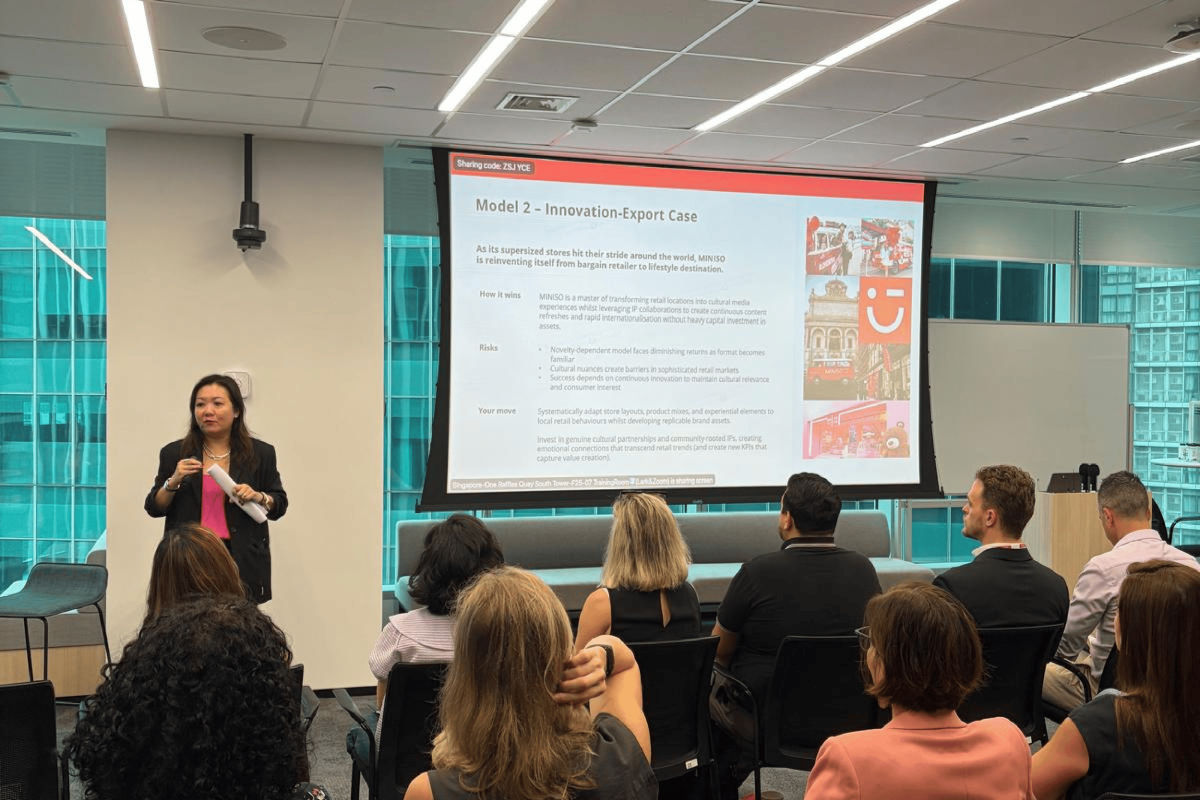
For decades, the "Made in China" label was synonymous with cost-efficiency and resource-driven scaling. However, as Siew Ting Foo and a panel of experts from Unilever, Oppo, and Stagwell recently shared, the narrative has fundamentally changed. With 37 Chinese brands registering on the NYSE in Q1 alone, the focus has shifted from "Chu Hai" (expanding globally) as a necessity for survival to "Chu Hai with Soul", a strategic move to build authentic, purpose-driven connections that resonate across borders, a concept propagated by Siew Ting.
5 Key Points: Decoding the New Chinese Model
1. The "Speed of Soul": 18 Months vs. 5 Years
The operational model in China has redefined the concept of time-to-market. While traditional automotive manufacturers might take five years to develop a new vehicle, brands like BYD are achieving this in just 18 months. This isn't just about engineering; it's a cultural "test-and-iterate" mindset. Marketing has followed suit, becoming ruthlessly ROI-driven while simultaneously seeking a "soul" that speaks to deeper cultural tensions.
2. The Paradox Economy: Premium vs. Value
The Chinese market is currently defined by a unique paradox: both premium and value segments are growing simultaneously. Consumers are increasingly "picky," moving away from gimmicks toward trust-based relationships. This requires brands to move beyond a "one-size-fits-all" global strategy and instead find the specific "cultural code" that makes their brand relevant in a landscape of high sophistication.
3. The Full-Funnel Collapse: KOL to KOS
In the Western world, we often distinguish between influencers (KOLs) for reach and sales teams for conversion. In China, this funnel has collapsed into a single, integrated content pool. The rise of Key Opinion Sellers (KOS) and Key Opinion Consumers (KOC) means that commerce is now a 24/7 conversation. These "trust-builders" manage communities on platforms like WeChat, handling everything from pre-sale storytelling to post-sale engagement within the same ecosystem.
4. Community Building is Brand Building
The panel highlighted that community is no longer just a channel; it is the brand itself. Dylan Yu from Oppo shared how the brand integrated with the cosplay community—targeting active, young creators who express themselves through photography. By building a "bridge" to this specific culture, the brand moved from being a utility to being a lifestyle enabler. This "fan economy" model shows that finding the right "fit" with a niche community is more powerful than broad-stroke celebrity endorsements.
5. Radical Empowerment and "Culture Squads"
A major hurdle for Multinationals (MNCs) like Unilever was the centralized control of global headquarters. To compete in China, brands must "unlearn" the need for HQ approval and empower ground-level teams to move at "China speed". This involves deploying "culture squads" that monitor thousands of pieces of content daily to stay in-culture in real-time. If you aren't part of the conversation on the day it happens, you are already irrelevant. This has been successfully implemented by CLEAR China.