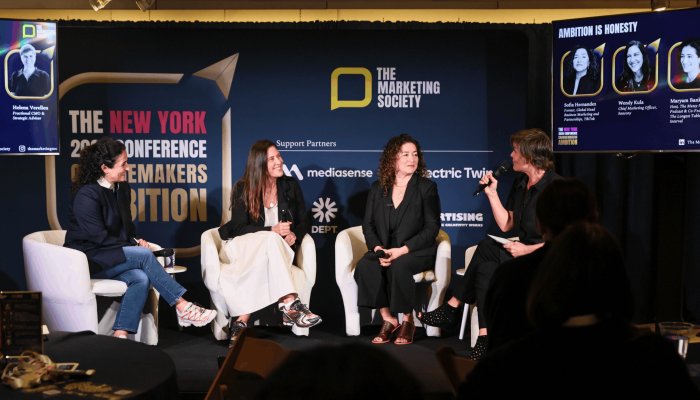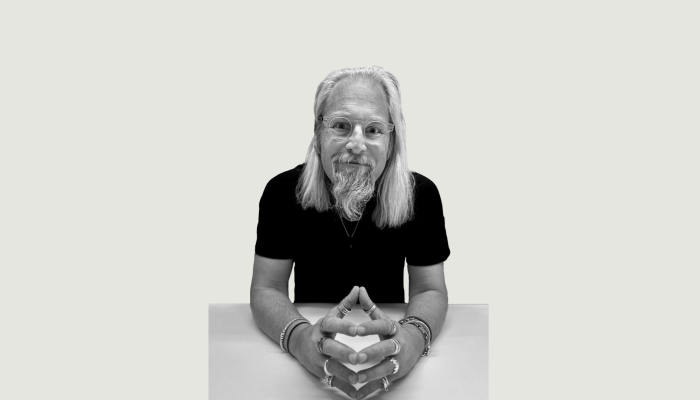

Lisa Gilbert, Vice President Global Marketing at Kyndryl and Board Member of The Marketing Society New York, reveals why the marketing leaders who thrive are not the ones who avoid disruption, they are the ones already moving toward to what is coming next.
When the music stops
I keep meeting brilliant marketing leaders who are playing a professional version of musical chairs. Not because they are losing. They are standing because the game itself has changed. Budgets shift, structures flatten, and roles are absorbed into other roles. You can do everything right and still discover there is one less chair than there used to be.
I don’t think this is a talent problem. I think it is the new operating condition of marketing. The leaders who thrive are not the ones who somehow avoid disruption. They are the ones who get good at what comes next. We celebrate the people who remain seated. We spend far less time talking honestly about what happens when the chair disappears.
Ambition is easy to celebrate when it works
That silence is understandable. Success stories are easier to tell. In marketing, we celebrate the promotion, the award, the campaign everyone talks about, and the quarter that exceeds expectations. We are less comfortable discussing the failed bet, the strategy that did not land, the reorganization nobody saw coming, or the idea we believed in that never gained traction.
But ambition shows up in failure too. If we are serious about growth and reinvention, uncertainty is not an exception to the career story. It is part of the deal. Increasingly, setbacks are not detours from the path. They are part of the path itself. None of this means lowering our sights. The ambitious marketer still wants the big win. But the win is not the only reward; much of it lies in what the effort makes of us. A launch that underdelivers sharpens our instincts. Unflattering data teaches us to read it honestly. Explaining why the numbers missed builds steadiness, while a budget cut can force a smaller, smarter idea. A chef often does her best work with what’s in season rather than what’s on her wish list.
The scoreboard records the outcome. It does not record who we became getting there.
The career ladder is giving way to career micro-chapters
For a long time, we described careers as ladders: build expertise, earn the next role and keep moving upward. That image feels less useful now. Sarah Ellis and Helen Tupper, who coined the term “squiggly career,” offer a more realistic picture: careers shaped by change, choice and movement rather than a single climb. I think of those shifts as a series of chapters.
One chapter may deepen your expertise. The next may ask you to learn an entirely new discipline. Another may bring a setback you never expected. New technologies, changing customer expectations and evolving business models are compressing these experiences into what I think of as career micro-chapters. In that environment, adaptability matters more than predictability.
What it means to bounce forward
For years, we have talked about resilience as the ability to bounce back. But the market is not standing still, so why should return to where we set the goal? Customers have moved. Channels have moved. Technology has moved. Expectations have moved.
The more useful question is not how we bounce back, but how we bounce forward. Bouncing forward means learning before you feel ready, rebuilding confidence before certainty arrives and stepping into opportunities that may not fit neatly within your existing expertise. It is less about returning to who you were and more about becoming who the next chapter requires.
The skills behind bouncing forward
This is not only a mindset. It requires practice. The World Economic Forum reports that employers expect 39% of workers’ core skills to change by 2030. That makes the ability to evolve a career a skill in its own right. A quote I often share with those who need it:
“Your value doesn’t decrease based on someone’s inability to see your worth.”
Author
I return to that line often because it captures the first of three capabilities that matter most to me:
- Know your worth beyond your title or organizational chart. Circumstances and other people’s perceptions can change without diminishing what you are capable of.
- Keep curiosity active. The leaders who handle change well are rarely those who already have every answer. They are the ones willing to say, ‘I do not know yet,’ and then go find out.
- Treat relationships as infrastructure, not as a task you begin when you need something. The strongest networks are built long before a role changes or an opportunity appears.
The music may stop. The chair you expected may not be there. But the marketers who thrive are not waiting for things to return to normal. They know their value, stay curious, and keep investing in people. They are already moving toward what is next.
Source: World Economic Forum, Future of Jobs Report 2025.