By midweek, Cannes Lions 2026 had settled into its defining tension: the future is arriving fast, but the human element remains irreplaceable. Here is what our Cannes Correspondents took from the final days on the Croisette.
Day Three: AI as infrastructure, people as the point
David Pugh-Jones noticed a shift in the AI conversation this year. Less hype, fewer grand predictions, more focus on implementation and impact. As he observed, AI has moved from an innovation category to business infrastructure. The question is no longer whether businesses are using it, but whether it is changing outcomes.
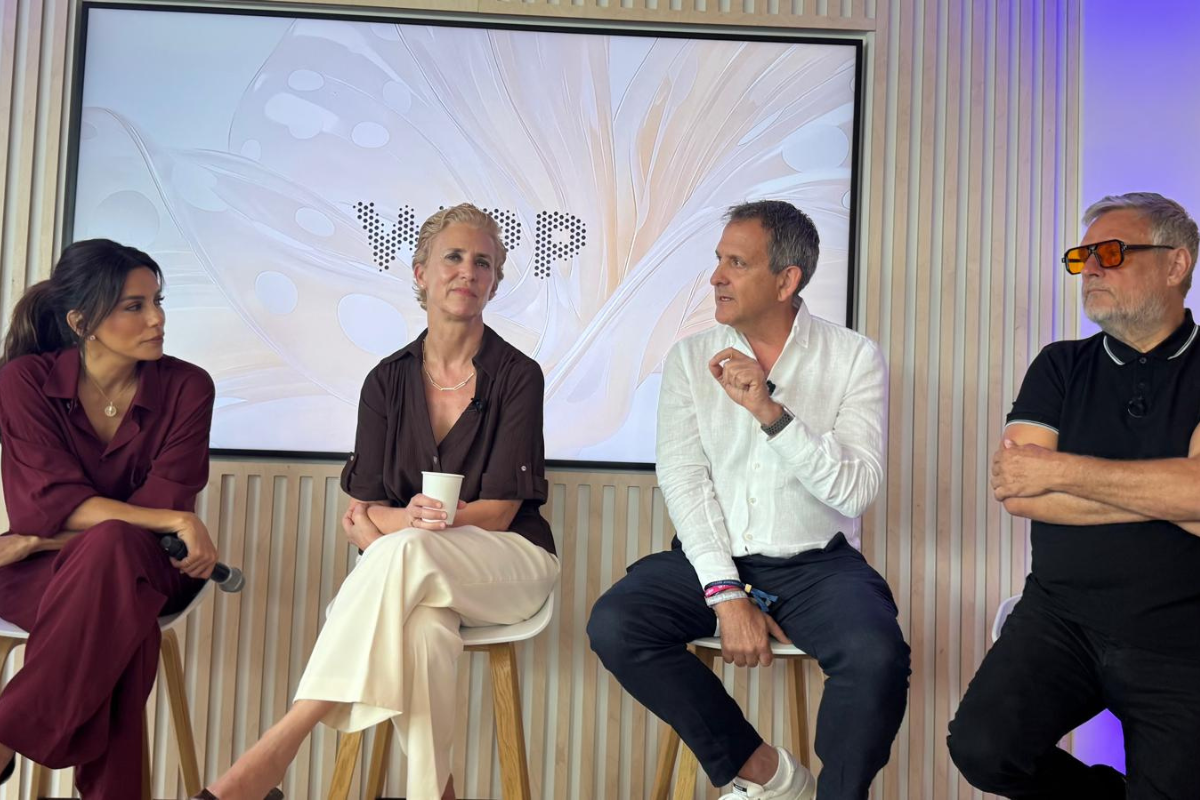
Nick Elliott heard the analogy of the week in a panel featuring John Rudaizky, Eva Longoria, Rob Reilly, which also included photographer Rankin and Diageo CMO Cristina Diezhandino: AI may be an incredible instrument, but the quality of the music still depends on who is playing it.
Alex O'Rourke found a challenge closer to home. Across multiple sessions, speakers argued that marketers need to position themselves not simply as brand leaders but as growth leaders. Yet alongside the ambition came a sobering figure from Mark Ritson's research: only 35 per cent of marketers passed a basic marketing knowledge test. The what of marketing does not change. The how does. Capability and strong fundamentals still matter.
Away from the technology, Day Three delivered a reminder that lasting change is built by people, communities and culture. Lucy Taylor explored how women's sport and women's health are driving cultural change, hearing that credibility comes from longevity and from funding the unglamorous work. Later, with Sue Bird and WNBA CMO Phil Cook, the theme was momentum built over decades rather than months, and every generation's responsibility to leave things better than they found them.
Yasmin O'Neal heard Eileen Gu offer a fresh take on pressure: pressure and joy do not have to be opposites. When people have agency over their choices, both can exist at once. And in one of those unplanned Cannes moments, Adele Ghantous watched the power cut out just before a Female Quotient session with Keke Palmer. No microphones, no screens. The session carried on with a megaphone and an impromptu performance. Creativity often shines brightest when things do not go to plan.
Day Four: conviction, the adoption gap and the discipline of repetition
The final wrap-ups brought the week's biggest ideas together.
At The Space Between the Idea and the Outcome at Female Quotient, Bozoma Saint John challenged the audience to stop waiting until they feel completely ready. Her cup analogy was the most quotable moment of the week: if your glass is already full of experience, there is no room left for growth. Go with the glass half full so new experiences can pour in and make you greater. Then you get a bigger cup. She paired it with an uncomfortable observation from hiring across four major companies: men ask for promotions before they are ready, while women wait until they have exceeded every benchmark and still arrive with humility. The gap is not competence. It is permission.
Bozoma also spoke about her decision to join The Real Housewives of Beverly Hills, framed not as a detour but as a strategic act of representation. She wanted to show a different type of woman at midlife: one who built her own career, navigated complexity and bought her own gold watch. She sees it as the same conviction she brings to any boardroom, and a reminder that some of the most underrepresented stories right now are women in their 40s, 50s and 60s at full power. Reinvention is not a detour. It is the strategy.
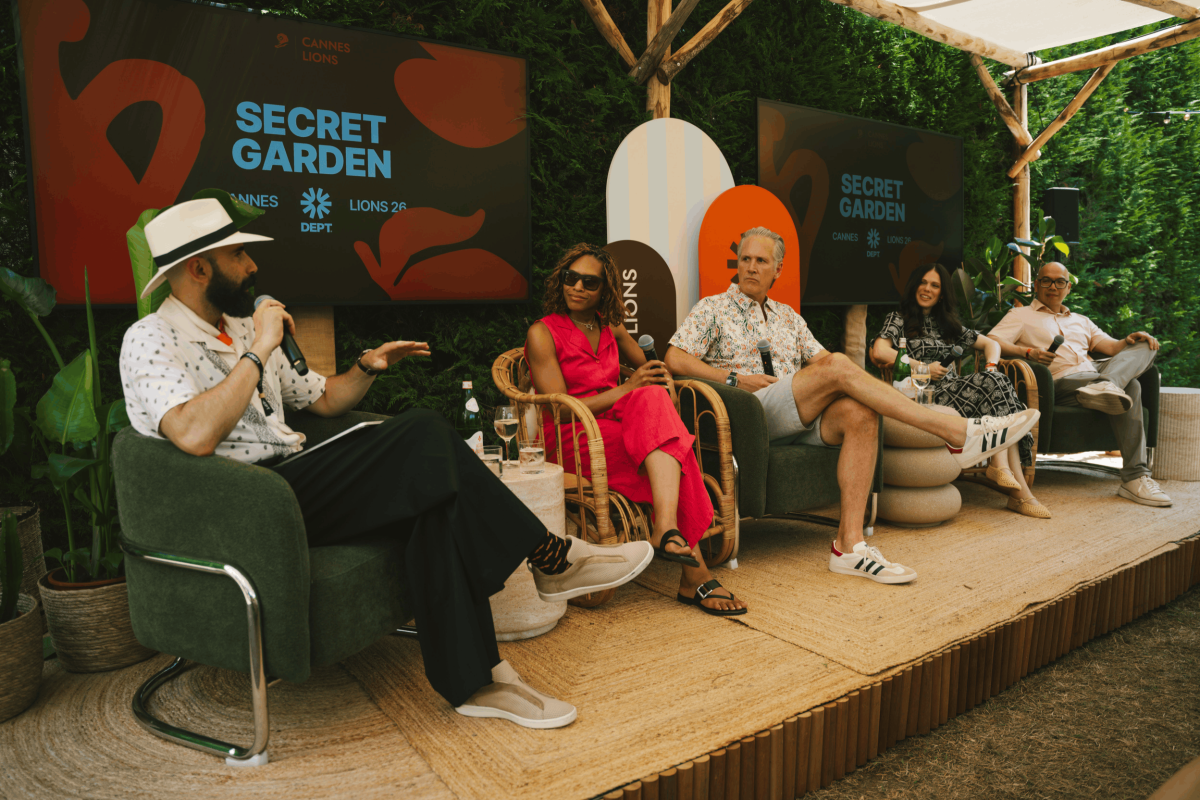
At DEPT's session on why leadership is the real AI advantage, the opening statistic reframed everything. Tech suppliers claim 90 per cent productivity gains from AI. CEOs report 2.4 per cent. Ask the employees actually using the tools and the answer is 0.9 per cent. Same technology, wildly different numbers. As one panellist put it: we are not in an AI problem, we are in a change management problem wearing an AI costume.
The panel's answer was not more tools. eBay's Adrian Fung argued that the wrong question is how to use AI to do what you already do, faster. The right question is what you would build if AI had existed from the start. eBay's own example was compelling: AI reduced a ten minute listing process to 30 seconds, and listings almost doubled. AI removed the friction so human energy could go to the passion, from sneaker communities to trading card culture.
BLACKROLL's Scott Zalaznik brought it back to leadership. The bigger the change, the more you have to communicate, and then communicate again. His rule of thumb: as soon as you are incredibly bored of saying it, you have only just got started. Make sure people understand the why before you get anywhere near the what. The technology is not the transformation. Communication, clarity of purpose and leadership consistency are.
Around the Palais, the same conclusion kept surfacing. Yasmin O'Neal heard why taste is becoming one of the most valuable skills a marketer can develop: as AI gets better at producing average ideas, the real value lies in recognising exceptional ones. Alex O'Rourke found that the award-winning work inside the Palais came from brands consistently expressing the same core idea in fresh ways, from Kraft Heinz to IKEA.
Lucy Taylor left The End of More with the line that could summarise the whole festival: the future will not belong to those who make the most, but to those who mean the most.
Or as Tim Hulbert put it after a week of conversations: everything has changed, and nothing has changed.
Whether you are building a brand, leading a business or navigating AI, the organisations that succeed will not be the ones doing the most. They will be the ones who know exactly what they stand for.
With thanks to our 2026 Cannes Correspondents: Alex O'Rourke, Charlotte Snelgrove, Ebru Tuygun, Nick Elliott, Daina Todorovic, John Rudaizky, Yasmin O'Neal, Tim Hulbert, Richard Boon, David Pugh-Jones, Lucy Taylor, Adele Ghantous and Craig Inglis.