Businesses across Asia are being asked to deliver stronger results today while building for tomorrow. In addition to identifying the next opportunity, the challenge for leaders is to ensure that the brands, people and capabilities delivering current performance can also support what comes next.
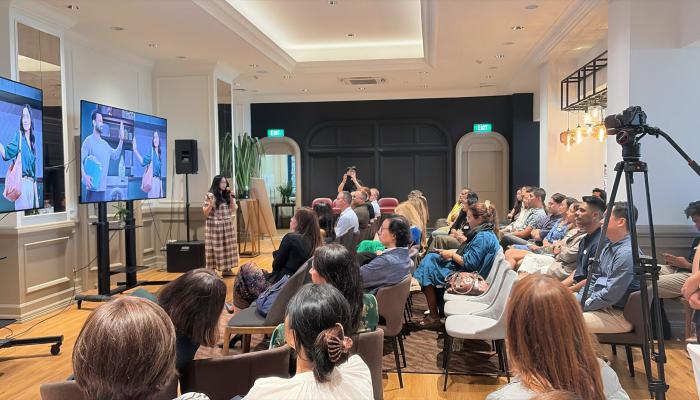
That tension shaped a Changemakers Club breakfast co-hosted by Prophet and The Marketing Society in Singapore on 29 September 2026. Marketing and business leaders explored how to balance immediate commercial demands with longer-term investment. Six priorities emerged, from brand, innovation, to organisational design and leadership, where questions worth putting to your own team for each priority surfaced.
1. Is your next big bet quietly starving the business that pays for it?
The established business is what funds future growth.
Participants reflected on the risk of diverting disproportionate attention and investment towards small new bets while underfunding the brands and products that generate most of today’s revenue. A promising launch cannot compensate indefinitely for a weakening core.
“We can put too much investment into a smaller brand and leave the business that pays the bills with a leaky bucket. We need to protect the core and be realistic about what new opportunities can deliver.” Marketing Leader, FMCG
Get this wrong and the maths is unforgiving: the new venture rarely scales fast enough to replace the revenue lost from a neglected core, and by the time the gap shows up in results, the recovery is expensive and slow. The task is to strengthen existing reasons to buy while creating new ones, by being selective about opportunities, clear about their role and realistic about their potential. Protecting the core should be a foundation for growth, not an excuse to resist change.
Take this to your next meeting:
- What have we stopped investing in recently to fund our newest bet?
Is our team prepared to react and recover if that bet doesn't land?
2. Are we killing tomorrow's growth with today's KPIs?
Delivering this quarter and developing a future growth platform require different measures of progress.
Applying short-term, demand-led KPIs to early-stage innovation can close down opportunities before they have had a chance to develop. Equally, long-term ambition cannot mean an absence of accountability. Leaders need clear objectives, appropriate milestones and an understanding of what each investment should demonstrate at its stage.

“Businesses often apply the same metrics to short-term, demand-led growth and longer-term innovation. You simply cannot measure them in the same way.”
Patrick Eastwood Partner at Prophet
The cost of getting this wrong is invisible until it's too late: promising ideas are judged against targets they were never designed to hit, quietly defunded, and the organisation never learns what it killed. Supporting different growth horizons requires more than individual commitment. It needs systems, incentives and resource allocation that make room for both current performance and future potential.
Take this to your next meeting:
- Are your current initiatives being measured against the wrong metrics?
What milestones would really demonstrate whether innovations are working?
3. Does innovation have a real home, or is it everyone's job?
Innovation is one engine of growth, but there is no single right model for organising it. Dedicated, embedded or hybrid approaches can all work.
Specialist teams protect space for experimentation but can become disconnected from operational realities. Embedding innovation across functions brings practical understanding, but risks adding responsibility to people already stretched by delivery demands.
“When innovation teams are separate from the rest of the organisation, their ideas can struggle to gain traction. We need to build innovation with the teams delivering today, but those teams are already stretched.” Marketing Leader, FMCG
When neither model is chosen deliberately, the result is predictable: good ideas with no route into the business, or stretched teams who deprioritise innovation the moment delivery pressure rises. The key is to give innovation a clear home, protect the capacity to experiment and create strong connections back to the core. Successful ideas need a route into the wider business.
Take this to your next meeting:
- Does your next good idea have the right owner?
What’s its path into the core business?
4. If a sound bet doesn't pay off, does it hurt the person who made it
Culture follows leadership signals. What leaders fund, measure, reward, promote and spend time on tells people what matters.
Asking teams to think long term while reviewing only immediate results sends a contradictory message.
“If a leader only reviews short-term results, it sends a signal that innovation does not matter. Who you promote, who you spend time with and what you discuss in meetings all send signals.”
Group Brand Strategy Leader Energy and Petrochemical
If a well-reasoned risk that doesn't work out quietly damages someone's standing, people learn to stop taking risks, and the organisation loses its appetite for the very experimentation it claims to want.
Leaders must visibly support both agendas, including recognising the people sustaining today's business rather than reserving attention for new ventures. It also means recognising intelligent failure: giving teams space to discuss what didn't work, capturing and sharing the learning, and rewarding sound judgement even when the outcome disappoints. Failure creates value only when the organisation learns from it.
Take this to your next meeting:
Once an innovation is sponsored by your organisation, how does the outcome affect the performance assessment of those responsible for the idea?
5. Do your local teams have enough freedom to act or only enough to ask permission?
Global capabilities and local responsiveness should reinforce each other.
Global teams bring investment, infrastructure and expertise. Local teams bring proximity to customers, market insight and the speed to respond. Participants highlighted the importance of creating room for locally led ideas alongside opportunities developed centrally.
“Global teams bring expertise, investment and infrastructure. But we also need space for locally led innovation, with the speed to pick up insights and act on them.” Brand, Marketing and Communications Leader, Sports and Events
Over-centralise and you miss what's happening in the market until a competitor has already moved. Over-localise and you repeat the same experiments in ten markets without ever scaling the winners. The challenge is to connect those strengths, giving local teams sufficient autonomy to act, while making sure promising approaches can access the support needed to scale. Collaboration across markets turns isolated successes into broader growth.
Take this to your next meeting:
When a local team spots an opportunity, how many approvals stand between the insight and the action?
6. Is AI giving your team room to grow, or just more to do?
The demand to do more with less makes capacity a strategic issue, and a workload problem.
Leaders discussed AI and digital transformation as ways to reduce routine effort and free people for higher-value work. The opportunity is to create space for customer understanding, experimentation and better execution.
“How can we use technology to help people focus on the things that matter most, rather than keep asking the same team to do more?”
Chief Marketing Officer Events & Digital Services
Treat AI purely as a cost exercise, and the time it frees either disappears in headcount cuts or fills up with more of the same. The organisations that win use the capacity it creates deliberately, for the customer understanding and experimentation that fuel tomorrow's growth. Technology alone will not resolve competing demands. Leaders must set clear priorities, decide what can wait and support teams in changing how they work.
Take this to your next meeting:
- If AI freed up a fifth of your team's time next quarter, do you know exactly what growth-building work would fill it? Or would it simply absorb more delivery?
Three questions to take back to your team
Growth requires more than a pipeline of opportunities. It takes an organisation ready to pursue them: a strong core, the right measures, connected capabilities and leaders whose everyday choices support both today’s performance and tomorrow’s potential
The Changemakers conversation didn’t produce one definitive answer, and it wasn’t meant to. Leaders heard how peers handle the same tension and went back with assumptions worth testing.