
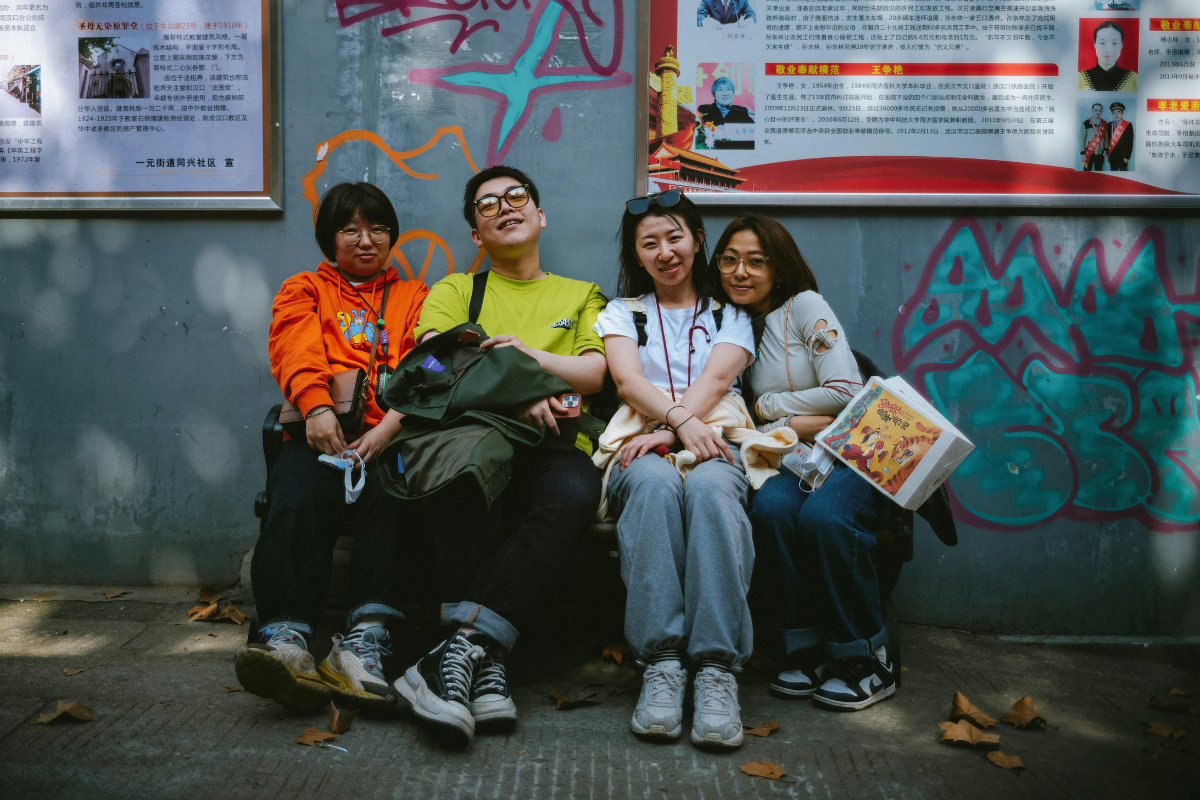
Inside Chinese youth's cozy communities
Burnout, economic pressure and digital fatigue are reshaping daily life for Chinese youth. Today, cosy, low-pressure spaces such as craft circles and dazi buddying are making connection more modular, interest-led and easy to step into – less about commitment, more about emotional regulation.
Nowadays, Xiaohongshu is filled with posts of young adults carrying Jellycat plush toys at work or in cafés. The trend appears in millions of posts on the Chinese social media app and is just one example of how China’s emotional economy has moved from a niche idea to a mainstream form of self-care. Canvas8 dives deep into this phenomenon in the report “How Chinese youth are making connection feel cosier.” The piece uncovers underlying reasons for this behavioural shift, and the many other ways it’s manifesting in young people’s lives today. Many Gen Zers and millennials feel overwhelmed by work pressure, economic uncertainty and digital saturation yet lack the time or social energy for effortful connection. In 2024, 83% of Gen Z workers reported burnout, higher than other generations. Lindsay Jang, a hospitality, media and wellness entrepreneur in Hong Kong tells Canvas8: “Modern urban life has created unprecedented isolation. When people live disconnected from extended family and childhood social networks, they naturally seek authentic connection over performance-based socialising.”
Why is this important?
The willingness to pay to feel better is becoming nearly universal, with emotional value now driving everyday choices. In 2024, plush toys generated CN¥3.96 billion ($585 million) in online sales. Douyin (China’s TikTok) counted 388 hot new trends in the same year and 852 in the first half of 2025. Both reflect how quickly micro-interests are spreading. On Xiaohongshu, collector chats trading Pop Mart plush toys are turning hobbies into micro-communities, with characters including Labubu driving meetups, queues and resale markets. Pop Mart’s Pucky Knock Knock blind box series, inspired by the Buddhist muyu (木魚) or wooden fish, turns a meditative ritual into a tactile object that functions less as a toy and more as a quiet coping mechanism. As emotional value shifts from ownership to shared low-pressure activities, connection becomes less about intensity and more about ease.
What’s the behavioural shift?
What has set off young China’s reimagining of community is a rejection of grind identity and the brands that romanticise it. China’s economic slowdown and stubborn youth unemployment have eroded confidence in the traditional work-hard-and-prosper narrative. Now, online countercultures such as ‘bed rotting’ and the viral ‘rat people’ meme have emerged to reject the country’s intense work culture. As pressure intensifies across work, cost of living and urban pace, calm is being rebuilt through controlled, tactile environments that restore a sense of personal rhythm. Younger generations are now rethinking where purpose comes from. But rather than opting out of society entirely, they’re redirecting their energy into forms of growth that feel more personal, social and sustainable. Cosy communities have become one such outlet, offering spaces to build identity outside of work while regulating how people feel day to day.
One defining format is night classes. Online conversations about them have surged, with Meituan reporting a more than 78% increase since early 2025. They’re also gravitating towards intimate, hobby-led gatherings – handicraft circles, casual sports, collecting communities – where belonging is built through doing. Hands stay busy, conversation is optional and emotional relief is shared without pressure, offering what Jang describes as a kind of “genuine intimacy” that is harder to access elsewhere. Brands are translating this into more participatory, sensory formats. In Shanghai, Valentino hosted a lantern-fair-inspired event centred on tactile activities rather than product displays, from sugar painting to tea rituals – moments designed to be felt, shared and taken home.
What’s the key takeaway for brands?
Three things brands can keep in mind when entering this space:
Turn hobbies into social breathing spaces
Use social rituals as avenues for self-growth
Minimise the social pressure from belonging
As cosy micro-communities grow, brand experiences should increasingly resemble hospitality rather than marketing. In September 2025, Starbucks China and RedNote launched a community space programme across more than 1,800 stores, organised around passions such as pets, handicrafts, cycling and running. Over 1,000 locations now function as DIY creative studios, with staff leading craft sessions designed for hands-on, low-stakes engagement. “The most effective spaces are those that ‘create permission for vulnerability,’ where people can be present without needing to optimise themselves,” Jang says. In this version of community, connection is built through environments that let people slow down enough to feel like themselves again.
Global strategic insights agency Canvas8 is the official culture partner of The Marketing Society Singapore and Hong Kong. Exclusively for Members in Singapore and Hong Kong: get eight weeks of access to the cultural intelligence that helps you move with certainty, not guesswork. Members, you will have been sent the link to access.
Register here.