Good marketing doesn’t just follow the business, it sets the vision, champions Hong Kong’s international edge, and makes room for bold ideas.
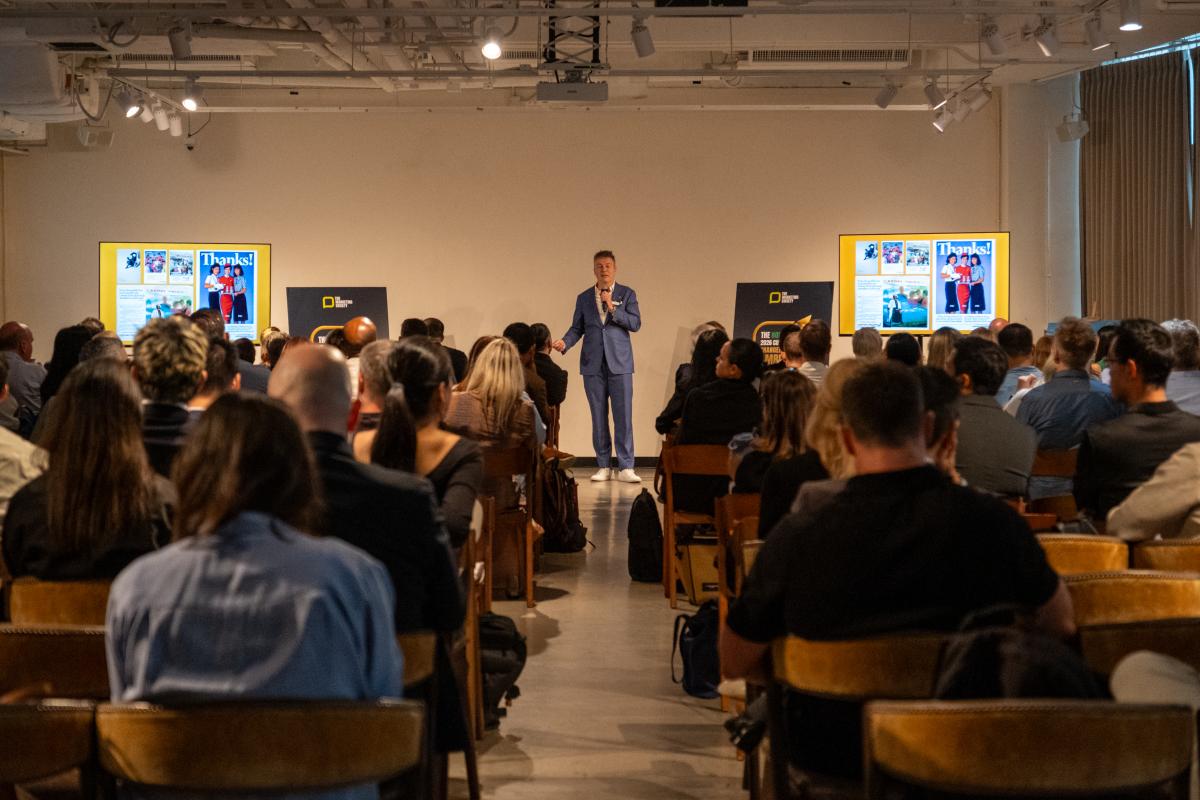
Nellie Chan, chair of The Marketing Society Hong Kong, opened last Tuesday’s Changemakers Conference with a challenge: “Are we ambitious enough?” In the middle of Q4, ambition is rarely top of mind. Like most teams, we’re just trying to get through the next few weeks so we can come up for air in January. It’s easy to get tired and cynical, which is why stepping into a room like this matters.
Ambition in the Hong Kong context
Nellie described Hong Kong as a city shaped by ambition, and former HKSTP chief executive officer Albert Wong reminded us of our real role. Hong Kong is not a standalone market of 7.5 million people, nor just another Asian hub. It is China’s most international city, a launchpad built on talent, research, and finance.
Getting comfortable is dangerous
A recurring warning from the stage was that past success creates blind spots. Jebsen chief executive officer Alfons Mensdorff-Pouilly talked about how complacency creeps in the moment you start believing you’re better than you are. Cathay’s Ed Bell shared a similar reality: decades of success left them overly reliant on old playbooks until they lost their “swagger.”
What I loved about Ed’s session was how Cathay rebuilt that confidence. They moved away from purely tactical promotions and leaned back into bold, emotional creativity. As Ed put it: “Consumer psychology had not changed. Human beings have not changed the way that they think.”
One of my favourite lines from the Jebsen session was that every business is a leaky bucket losing customers every day, and marketing’s job is to keep filling it. In my view, organisations have for years overstated stickiness and loyalty. Customers drift away and back constantly, and too many of us rely on past wins or heavy buyers alone to keep that bucket full.
How not to be that gweilo who got it wrong
From what I see, Western marketing is often too abstract and out of touch, what people in Cantonese call lei dei (離地), or “off the ground.” Hong Kong Ballet’s Septime Webre shared how he set out to get it right by reimagining a ballet grounded in Hong Kong.
Creating a new ballet takes at least two years. Rather than waiting, he led with bold marketing first and turned the Ballet into a source of civic pride long before the new show hit the stage: “I knew art is at its most powerful when people can see themselves in the work.”
Thinking about Septime’s story alongside Ekimetrics’ Olivier Kuziner, who noted later in the day how much time marketers lose trying to align stakeholders, hit on a real tension in our industry. Too often, marketers get sidelined from product conversations, when what we really need is the courage to shape the vision first. I’ve been very fortunate to have a C-suite that understands that.
The courage of `becoming'
In Chinese culture, humility is a core value, though it can sometimes hold brands back from owning their story on a global stage. Cathay’s Kasey Yim pushed back on that saying, “We no longer have to flatten our culture to be seen.” That cultural confidence is everywhere in Hong Kong right now. There’s a renewed push to celebrate our intangible cultural heritage not just as things to preserve, but as a real creative strength.
Resilience came up just as honestly. Three-time Olympian Camille Cheng spoke with my SCMP colleague Cat Nelson about what happens after you achieve the goal. After defining an entire season around qualifying for Rio, Camille hit a lonely comedown. As she put it: “You have the power to reframe everything, whether it’s pressure or it’s nerves or anxiety.”
Stephanie Tan, founder of modern TCM wellness brand NOOCI, offered a different kind of honesty. She spoke candidly about how a zig-zag career gave her the range to build a business. Starting a brand is the easy part, she reminded us; real courage is the grit to keep showing up once the hype fades.
Why brands need agencies as a mirror and a window
The panel, moderated by Publicis Groupe’s Garron Chiu and joined by his colleague Ethan Chu and Cathay’s Kasey Yim, was my highlight of the afternoon. Garron pointed out that despite stats claiming people hate ads, brands still create some of the most shared content in the world. The real problem is that most marketing simply isn’t good enough.
Keeping creative standards that high requires protecting the team’s energy. Garron spoke about how hard he works to stop his people from becoming jaded, and Ethan added that his agency calls feedback `builds'. It’s a simple word choice that changes how people feel about improving an idea, and something I had forgotten from my own agency days. Agencies sometimes miss the realities of internal client-side politics, but their culture breeds the optimism and exploration we value most. At their best, they act as both a mirror and a window: showing us how our brands are truly perceived and what is possible beyond our own walls.
3 Take aways
Heading into Q4, here's what I'll take back to my own work
2 Action items

“We no longer have to flatten our culture to be seen.”
Kasey Yim Cathay Pacific