Las Vegas doesn’t do subtle, and neither does Formula 1 when it rolls into town. The inaugural Las Vegas Grand Prix in 2025 wasn’t just a new race on the calendar. It was a full-scale cultural takeover.
As the Formula 1 season returns for 2026, Richard Boon, Co-Founder and CEO of OH SIX Agency shares his insights from The F1 Business Summit, held in Las Vegas last year and what it means for marketing.
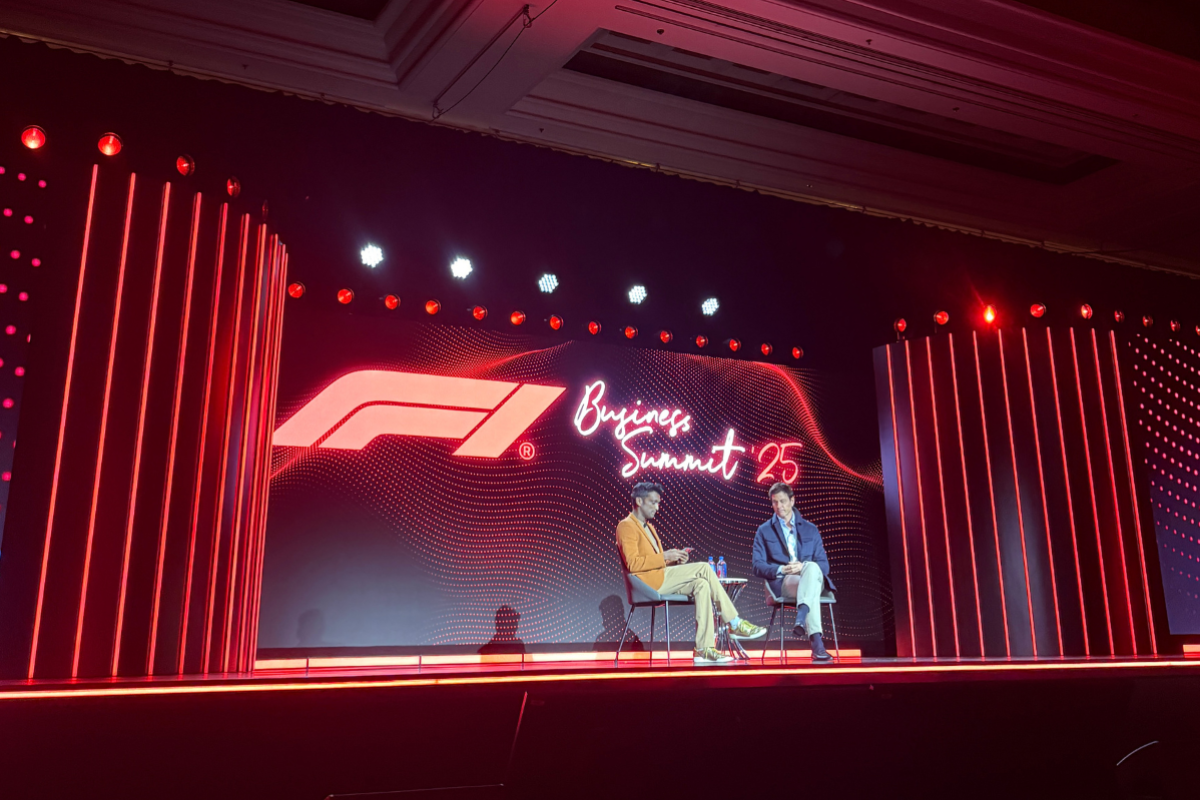
The inaugural F1 Business Summit, held alongside the race, was a timely reminder of just how seriously Formula 1 is taking its role as a global entertainment and content platform. The event itself was slick, well run and refreshingly disciplined. Everything was on time, curated thoughtfully, and packed with genuinely strong speakers and panels. More importantly, it felt powerful. It highlighted the scale of opportunity for marketers as F1 continues to grow, innovate and expand its global reach.
Hosted by Jack Whitehall, who OH SIX have been separately filming with all season for the hit social series ‘The Secret Concierge’ for 160over90, Marriott Bonvoy and the Mercedes-AMG PETRONAS F1 Team, the summit brought together leaders from F1, global brands, rights holders and platforms to talk openly about what’s working, what’s changing, and what’s coming next.

Spoiler: social in the form of branded content and branded entertainment are no longer side dishes. They are part of the main event for fans around the race weekend.
Richard Boon OH SIX
Growth is easy. Relevance is hard
Formula 1 leadership was candid. The sport is more popular than it has ever been, and that is exactly why it has to keep evolving. Growth only works when it is rooted in relevance; otherwise, a brand can lose its edge. The answer is not shouting louder, it is showing up differently, being socially relevant, creating experiences people actively want to engage with, designing entertainment, travel and content that feel earned, not imposed.
That landed strongly for me. At OH SIX, we operate at the sharp end of F1 reaching new audiences, particularly through social series and humorous, engaging branded entertainment. Formula 1’s willingness to embrace new formats, new tones and new channels, and to show a more human side of the sport and its drivers, has been a major driver in attracting new fans since Liberty Media’s takeover.
Fully embracing the F1 spirit and Vegas irony
Somewhere between panels, paddock passes and hospitality, I found myself fully leaning into the F1 spirit, including buying a pair of Goodr limited-edition Crayola “Vegas” sunglasses. Ironically, I wore them mostly against a backdrop of British winter-style weather outside the hotels. A rarity in Vegas, but also a reminder of how self-contained the experience was and the buzz of merch on offer.. The sprawling hotel complexes and seamless transport kept fans immersed without friction. That level of experience design matters, and it is not accidental.
Entertainment is not a tactic. It is the strategy
Toto Wolff put it plainly: “We must reinvent ourselves to continue to entertain.” That word, entertain, came up repeatedly across the summit - not advertise, not communicate - entertain. Fans now consume at least one piece of F1 content every single day outside of race weekends. That should give any CMO pause.

If your brand only shows up when it has something to sell, you are invisible most of the year.
Richard Boon OH SIX
What stood out equally was Toto’s leadership philosophy: no blame culture, no politics, see it, say it, solve it. Believe in the process, back development, work hard, and above all, bring enthusiasm. Having filmed with Toto the day before, this was not a soundbite. He lives it. That culture is exactly what allows teams, and brands, to move fast, stay relevant and keep levelling up. A truly inspirational leader who I admire.
Stop asking what is hot. Start building what is next
Michael Rubin’s contribution reinforced something I have always believed: standing still is the most expensive decision you can make. The real question is not what fans want today, it is where their behaviour is heading tomorrow. Personalisation is not a buzzword; it is the expectation. Fans do not want to be targeted, they want to be understood. Throughout my career, what has motivated me most has been pulling the future closer to today. The brands winning attention now are the ones brave enough to build for what is coming, not cling to what is familiar.
Authenticity is the multiplier
Discussions with Disney, EA, LEGO and Formula 1 landed on a shared truth: fans have an exceptional inauthenticity radar. LEGO’s partnership with F1 is a masterclass in branded entertainment done right. By bringing the power of play into the sport through licensing, content and activations that merge both worlds, LEGO has not borrowed F1’s audience; it has added something meaningful to it.
Drivers in LEGO cars, LEGO trophies, products fans actually want, fun as a strategic choice. That is the holy grail: when two fan communities collide in a way that feels joyful, not transactional. Sponsorship works best when it stops behaving like sponsorship.
Women’s sport is not the future. It is the opportunity today
Susie Wolff’s session on F1 Academy was a powerful reminder that investment in women’s sport is not about optics, it is about growth. Expanding the talent pool at younger ages, creating clearer progression pathways and engaging new audiences is already unlocking commercial and cultural value. Brands that move early will not just benefit; they will help shape what comes next.
From summit stage to paddock reality
Beyond the summit, the real proof points were happening trackside I spent time in the paddock meeting fellow The Marketing Society member Marcus Prosser from Williams Racing, alongside time in the pits with Williams, Mercedes and F1 Academy, and watching qualifying up close. Being that close to the sport and the people running it reinforced just how professionally this ecosystem is built.
Equally powerful were the activations. Carlos Sainz’s meme-inspired Smooth Operator Dance Lounge was a standout, a brilliant example of internet fandom and culture being translated into a real-world brand experience. It showed how memes, humour and social moments can evolve into physical activations without losing their soul.
I also spent time with Paul Ripke, Valtteri Bottas’s self-described Instagram husband and creator who understands fandom better than most. I then went to check out Heineken’s lounge, the paddock experience and the pits. I bumped into a familiar mix of celebrities, creators and athletes we have worked with over the years. It was a star-studded paddock, yes, but more importantly, it was a live demonstration of culture, content and community blending seamlessly. Content being at the centre of various celebrity ambassadors in the paddock.
Why we operate like an F1 team
One thought kept returning throughout the summit and the weekend: this is how modern organisations should run. At OH SIX, we talk about operating like an F1 team. Merch becomes brand recognition.
How to operate like and F1 Team
Above all, it is about entertaining audiences of millions through social relevance. We are brought in to elite sports teams by brands and agencies as a specialist driver of transition, helping brands reach younger audiences, adapt to modern viewing habits and use branded content and entertainment to grow hype, attention and fandom, not just impressions. If you want to be part of culture, you have to create it and lead.
The real takeaway from Vegas
Las Vegas did not just host a race, it showed what happens when sport thinks like entertainment, brands think like creators, and content is treated as a growth engine, not an output. For marketers, the message is simple:
- If you want attention, you have to earn it
- If you want fandom, you have to entertain
- If you want relevance, you have to show up every day.
That is not motorsport. that isn’t just the lights of Vegas, that is the new era of marketing offered by sports, music and entertainment partnerships.