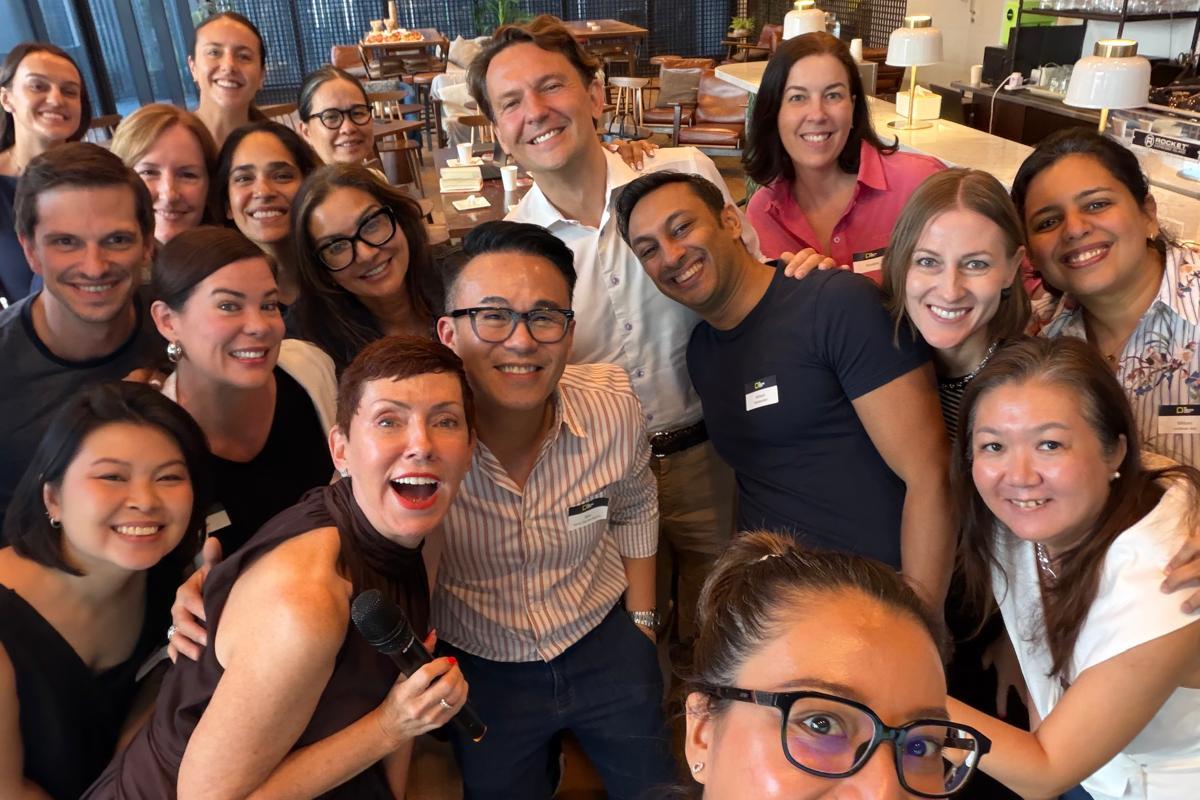
There is always such as buzz when TV legend Maz Farrelly blesses Singapore with her presence. Her energy is off the scale, she is brutal but warm and outrageous but practical in equal measure. The kind of person who's worked with Beyoncé and King Charles and still makes you feel like the most important person in the room.
The workshop built on one uncomfortable idea: nobody owes you their attention no matter who you are, you must earn it. I can still hear the echo of Maz’s wisdom in my mind as she said, “It’s not my job to find you interesting. It’s your job to be interesting.”
Our industry has always claimed to love creativity. Somewhere along the way, a lot of us forgot how to be professionally engaging.
Be Allergic to Mediocrity
Farrelly's session opened with a blunt premise: in television, if you don't hook someone in the first few seconds, they're gone. There's no loyalty, no benefit of the doubt, just a thumb hovering over the next button. She argued marketing content lives under the same pressure, now more than ever.
Most marketing teams don't get fired for taking risks. They get cancelled for being ignored. When the BBC's Weakest Link launched - deliberately cold, brutal, and unlike anything on British primetime - it received thousands of complaints. Maz and her boss were thrilled. Complaints meant people were feeling something. While most marketers obsess over being on-brand and on-message, Farrelly's point was simple: competence is table stakes. Danger beats safety. Every. Single. Time.
Outrageous, Not Polished
Phoebe Waller-Bridge, creator of Fleabag and Killing Eve, made the same case at the 2017 BAFTAs. Accepting her award, she thanked her mother, who had told her: "Darling, you can be whatever you want to be, as long as you are outrageous."
Louis Theroux made the same point more quietly at MAD//Fest London this year. After decades documenting people, his conclusion was that most of us are odder and more specific than the version we bring to meetings and LinkedIn profiles. We spend enormous energy sanding that down. As marketers, we're supposed to know better. We know unfiltered human emotion drives engagement. We just forget to apply it to ourselves
What makes her talks so memorable is that she roots everything in what we already know to be true. No algorithm thinks like a human. People are deeply unique, and our personal identities - dare I say personal brands - should reflect that.
AI Can't Save Boring
A large part of the talk tackled the question every marketing leader is currently wrestling with: how much of this can AI actually do? Farrelly's answer, drawn from years of producing content that had to hold a room's attention, was that AI is a genuinely useful tool for speed and scale, but it can't originate the thing that makes people feel something. That instinct, she argued, still belongs to humans.
This matters for anyone integrating AI into their marketing stack right now. The risk isn't that AI produces bad content. It's that AI produces safe content, and safe content is iNvIsIbLe.
Every Detail Is Doing a Job
Farrelly's most practical point was that every choice you make about how you show up is doing a job - for you or against you. Your LinkedIn headline, how you open a meeting, the pause before you answer a question, all of it is telling a story. She walked through live LinkedIn reviews to prove it, showing how quickly a profile either earns curiosity or blends into the scroll. As Maz put it, “You can’t bore people into buying something,” so why are your comms doing exactly that?
Different Beats Better
There are only two ways to compete, she told the room: do what everyone else does but better or do the opposite. Carve out a niche. Most teams default to the first option because it feels safer. Her case was that safer is exactly why so much marketing content, and so many personal pitches, disappear into outer marketing space.
As Maz reminded the room, “Hope is not a strategy.” Strong communicators do not cross their fingers that people remember them. They decide in advance what they want someone to feel and do next and build towards it on purpose.
What I'm Taking Back
Maz’s advice was simple: “Bring cake into the office.” Being liked is nice but being remembered is better.. Being liked is nice but being remembered is better.
Go fix your LinkedIn headline. Right now. Does your first line make a stranger want to keep reading? If you're not sure, the answer is no.
Before your next pitch, decide the one thing you want someone to walk away with. Just one. Then build everything around that.
Maz’s challenge was clear: “Stop trying to be better than everyone else. Be different.” Sameness is forgettable and forgettable is expensive.
As Maz made clear throughout the session, “Attention isn't given. It's earned.”